Democratising vehicle safety in Africa: Global NCAP’s Forum for Safer Mobility lands in Cape Town
It was our absolute pleasure to bring Global NCAP’s Forum for Safer Mobility to Cape Town, South Africa.
Hosted in partnership with the Automobile Association of South Africa, Global NCAP’s second Forum coincided with Safety 2026, the 16th World Conference on Injury Prevention and Safety Promotion.
The Cape Town session followed the official debut of Global NCAP’s Forum for Safer Mobility earlier this summer which was held alongside the UN High-Level Meeting on Global Road Safety in New York and opened the stage to the revolutionary technology that is Intelligent Speed Assistance (ISA).
In Cape Town, stakeholders that have relentlessly advocated for vehicle safety came together to ensure that life-saving improvements to vehicle safety are not confined to the world’s wealthier regions with this week’s Forum for Safer Mobility dedicated entirely to a single theme - Democratising Vehicle Safety in Africa.
The session began with a powerful keynote from South Africa’s Deputy Director-General for Road Transport Lebohang Ntwampe who set the critical tone for African policymakers, industry leaders, development partners and media in the room to shape the future of vehicle safety across the continent.
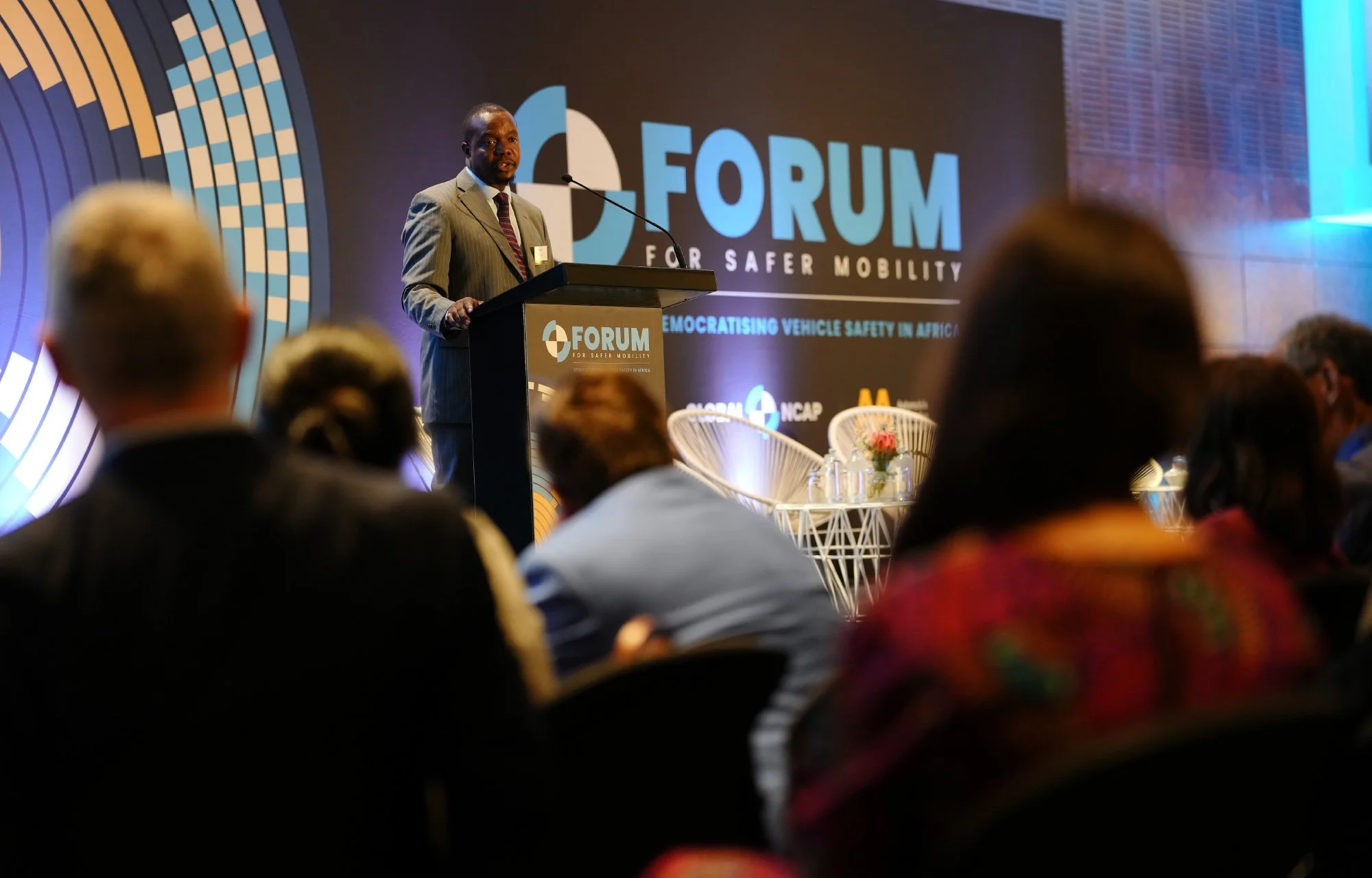
ACTING DEPUTY DIRECTOR GENERAL FOR ROAD TRANSPORT, SOUTH AFRICA
Speaking on behalf of South Africa’s Minister of Transport, Mr Ntwampe highlighted the national impact of the #SaferCarsForAfrica campaign, while Bobby Ramagwede, CEO of the Automobile Association of South Africa, pointed to the campaign as a national turning point that has woken up South African consumers to their right for safe cars and safe mobility.
"The establishment of #SaferCarsForAfrica is one of the most important developments for South Africa,” Mr Ntwampe told the audience.
“Safety has to be the number one priority of every car that comes into South Africa. The results have encouraged safer vehicles and availability of safety technologies. It has helped align South Africa with international best practice and ensure consumers have access to safety already available to the rest of the world."
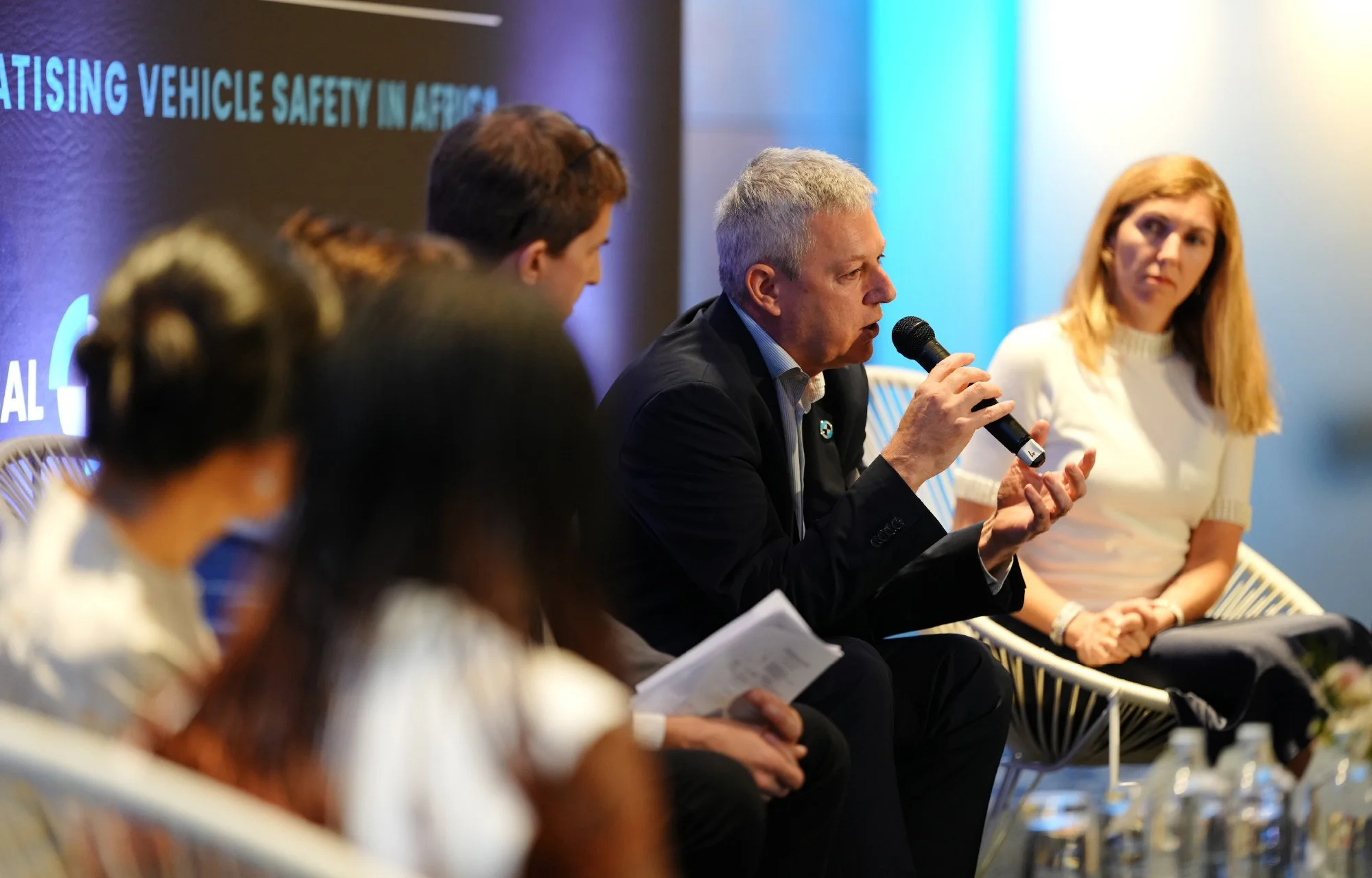
LUCA PASCOTTO, fia
A series of hard-hitting messages then ensued from major stakeholders in the room including Bloomberg Philanthropies, the WHO, the UNECE, FIA and FIA Foundation.
Bloomberg Philanthropies’ Becky Bavinger called for maximum age limits for vehicle imports coupled with minimum safety standards and continued independent testing. The FIA Foundation’s Olivia Nalwadda said Africa must demand greater vehicle safety through NCAPs and regulation while emphasising that vehicle safety must be paired with the other pillars of the Safe System approach. Luca Pascotto from the FIA underlined how Global NCAP’s safety ratings go hand-in-hand with the FIA’s Road Safety Index which equips organisations with a practical methodology to make life-saving procurement decisions.
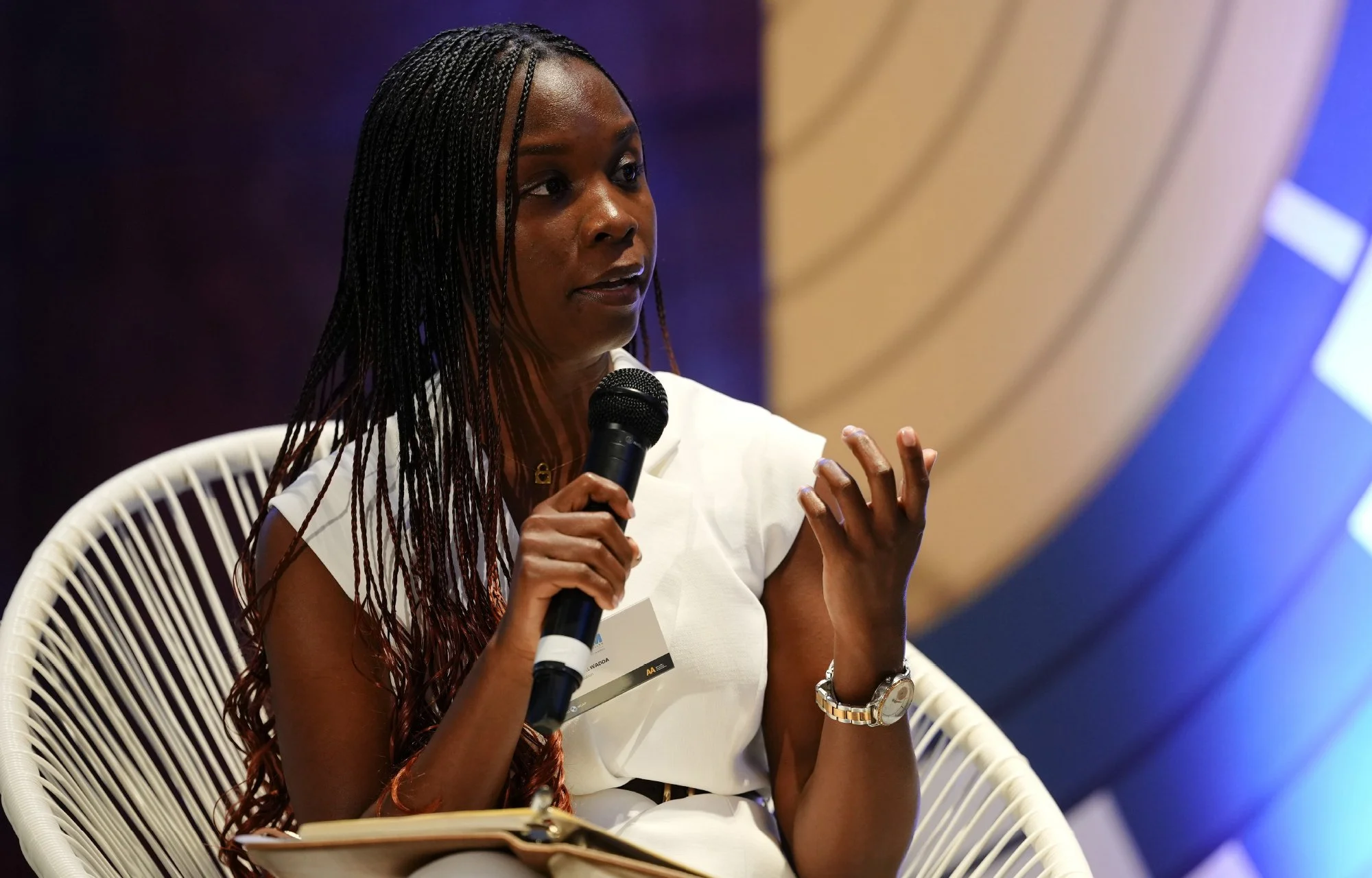
Oliva Nalwadda, FIA Foundation
That’s just a snapshot of the messages that rang unapologetically loud at the Forum. Rounding it all up was a simple, cutting truth from the Forum’s MC and South African consumer journalist Wendy Knowler: vehicle safety must not be dependent on the market in which you were born.
The discussion was then brought to life with Global NCAP’s latest #SaferCarsForAfrica crash test results. With a much improved outcome for the Toyota Starlet, one of South Africa’s most popular vehicles, the results made the room’s case in point and showcased what’s possible when life-saving technologies are prioritised.
A turning point for Africa’s roads
The Forum came at a pivotal moment for Africa. While global road deaths have fallen in recent years, Africa is the only WHO region to have observed a surging number of fatalities, with a 17% increase between 2010 and 2021.
Meanwhile, Africa accounts for nearly 20% of road deaths globally despite being home to 15% of the world’s population.
The landscape is hoped to be shifting. Earlier this year, Africa adopted its first continent-wide, legally binding road safety framework which marked a major step towards tackling its road safety crisis. The ‘African Road Safety Charter’ aligns participating nations with the Decade of Action goal of halving global road deaths and serious injuries by 2030.
But with Africa’s global road death comparison looming over the continent, there has never been a more urgent time for the region to act.
It is absolutely essential that the road safety community unites to share knowledge, technologies and innovations in and between the public and private sector, using every tool at our disposal to ensure that access to safer roads is never determined by where people live.
With this week’s Forum for Safer Mobility, Global NCAP was humbled to be part of that effort.