Global study calls for smaller vehicles, faster electrification and modal shift
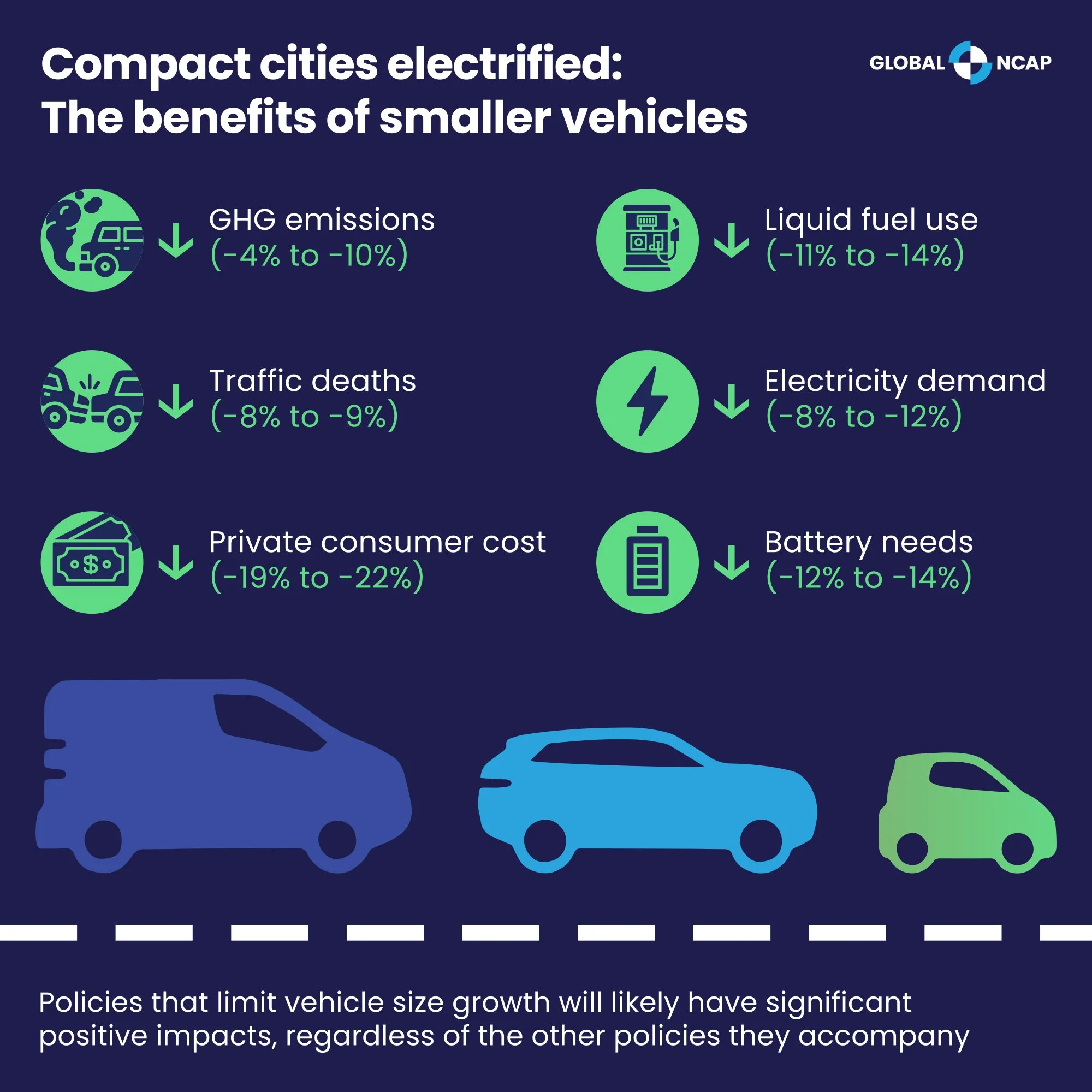
A global study has found that capping vehicle size, accelerating electrification and increasing the modal shift to walking, cycling and public transport could cut liquid fuel demand by 85% by 2050, while slashing costs and reducing road deaths.
Conducted by the Institute for Transportation and Development Policy (ITDP) and the University of California, Davis, with support from the FIA Foundation, the study examined passenger transport trends across six major economies: Brazil, China, India, Indonesia, Mexico and the United States.
Five scenarios were modelled: continuing current trends in vehicle growth and electrification; capping vehicle size at 2020 levels; increasing walking, cycling and public transport use in urban areas; accelerating vehicle electrification; and a combined approach.
The results are clear: no single measure delivers as much impact as doing all three together. In combination, urban passenger transport emissions could drop by more than two-thirds, saving around 1.2 gigatonnes of CO₂-equivalent each year by mid-century - roughly matching Indonesia’s total emissions in 2023. Scenarios combining electrification with smaller vehicles and mode shift could reduce overall transport energy demand by 70% and cut liquid fuel demand by 85%.
“Policies that prevent vehicles from getting larger can deliver substantial benefits, especially when combined with other transport strategies,” said Heather Thompson, CEO of the ITDP. “This is especially important these days as we see the availability and price of fuel increasing significantly.”
Sheila Watson, Deputy Director of the FIA Foundation, emphasised the broader global context. “People around the world are seeing their costs at the pump and elsewhere rising by the day because of their reliance on fossil fuels. This report shows how the right combination of policies to accelerate electrification, cap vehicle size and shift urban transport modes, reduces that reliance and saves consumer costs all whilst significantly pushing the dial on climate action.”
Breaking down the impact
Even on its own, limiting vehicle size delivers substantial gains. The study finds it could cut private-sector direct costs by up to 22% by 2050, with lower purchase costs, maintenance and fuel expenses for consumers.
It could also reduce liquid fuel demand by up to 14%, electricity consumption by up to 12%, and battery requirements by up to 14%. Road crash deaths could fall by 9%, while greenhouse gas emissions would drop between 4% and 10%.
Encouraging a shift toward walking, cycling and public transport offers its own benefits. Mode shift alone could save up to 1.5 million lives globally by 2050 through the health benefits of increased physical activity, while also reducing road traffic fatalities which is currently the leading cause of death for people under 30.
While cities and governments have multiple pathways to improve transport systems, the report concludes that the greatest gains come from integrating all three strategies: limiting vehicle size, faster electrification, and a decisive shift toward active travel and public transport. Without such intervention, current trends risk locking cities into a future of higher costs, increased pollution and rising road fatalities.