#SaferCarsForAfrica
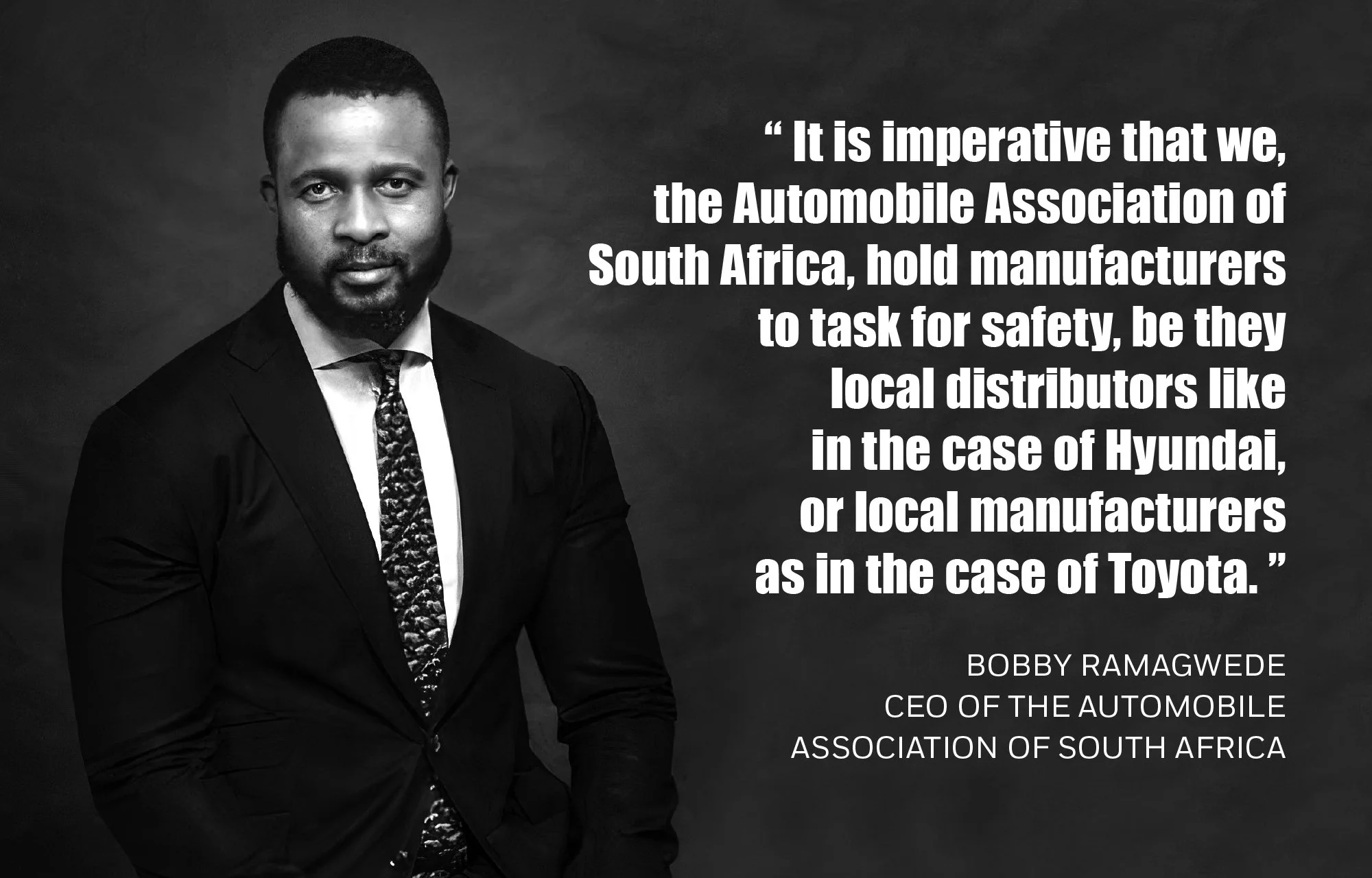
contributor: Bobby Ramagwede, CEO of the Automobile Association of South Africa
As we step into 2026, I am filled with optimism and determination about the journey ahead. Mobility is no longer just about moving from point A to B; it is about enabling opportunity, connecting communities, and shaping how we live, work, and thrive.
The mobility space is undergoing a profound transformation. What was once a vision of the future is now becoming reality: cleaner cities, smarter transport systems, and more inclusive access to mobility for all. Yet, as South Africa and the African continent, we stand at a critical crossroad of possibility. The choices we make today will define the mobility landscape for generations to come. Together, we have the opportunity to lead with vision, courage, and responsibility.
It is with this courage and responsibility outlook that the critical work we’re doing in South Africa with the #SaferCarsForAfrica campaign comes to the fore - which at the end of last year revealed a zero-star rating for the Hyundai Grand i10, and more recently highlighted the safety shortcomings of the Toyota Corolla Cross - with the latter’s two-star rating for adult occupant protection causing quite the stir in South Africa, where Toyota as a brand leads the overall sales charts by a substantial margin, and has held this top step of the sales podium for decades.
It is imperative that we, the Automobile Association of South Africa (AASA), hold manufacturers to task for safety, be they local distributors like in the case of Hyundai, or local manufacturers as in the case of Toyota. More telling about the Corolla Cross is that the vehicle is built locally, making for a little more sting in the tale, with consumers wondering how a homegrown product could be safer in markets outside of ours.
And it is to this very point, that cars sold locally should absolutely be as safe as the exact same car sold in other markets, that the AASA takes our role of consumer advocacy to these brands. We demand more from them, citing examples like Volkswagen and it’s locally produced Polo Vivo, which failed the #SaferCarsForAfrica Global NCAP testing a few years back, followed by the OEM updating safety changes on the line at its plant in the Eastern Cape, working with us to re-test the Vivo, and the popular hatch subsequently crashing far more safely than before, making for a much-better NCAP result and a safer motorist on our roads. Not to mention the goodwill this brand showed the consumer through this responsible behaviour.
It is with this ethos in mind that we proactively approach the OEMs locally for across-the-table fair and honest discussion. It is really not good enough when brands hide behind meeting local legislation when introducing these models to the local consumer, especially when one factors in that our local safety standards for homologation are indeed left wanting, to put it mildly. As someone said recently, a wheelbarrow would probably get through!
We’re not beating the “us-versus-them” drum, with consumer advocacy the core principle of these ratings, we choose to work proactively with the OEMs when they’re faced with these results, often left stony-faced at the reality that, like with Hyundai, a meaningful safety solution will mean harder stares at the very DNA of the vehicle, versus, for example, an ‘easier’ solution like a curtain airbag, in the case of the Corolla Cross.
This proactive-engagement approach certainly has its merits. Giving the local manufacturer access to the Global NCAP team, in-depth explanations, and detailed results and schematics, has resulted in savings in time and resource for the brands, and solutions being adopted and implemented more quickly - alongside a healthy respect for and understanding of the critical work both the AASA strives to deliver locally, and the respect the GNCAP team should always be entitled to for the critical safety findings they deliver.
Ultimately the consumer in South Africa should always get a safe car. Would we like more cars tested, yes. Would we like apples-for-apples sold here versus Europe, absolutely. Is the dream an African NCAP, without a doubt. This proactive approach builds bridges to all these aspirations, both with these purveyors of metal locally and the corridors of government, whom we would like to believe keep an eye, albeit from a distance.