UN Road Safety Fund publishes Annual Report of global impact
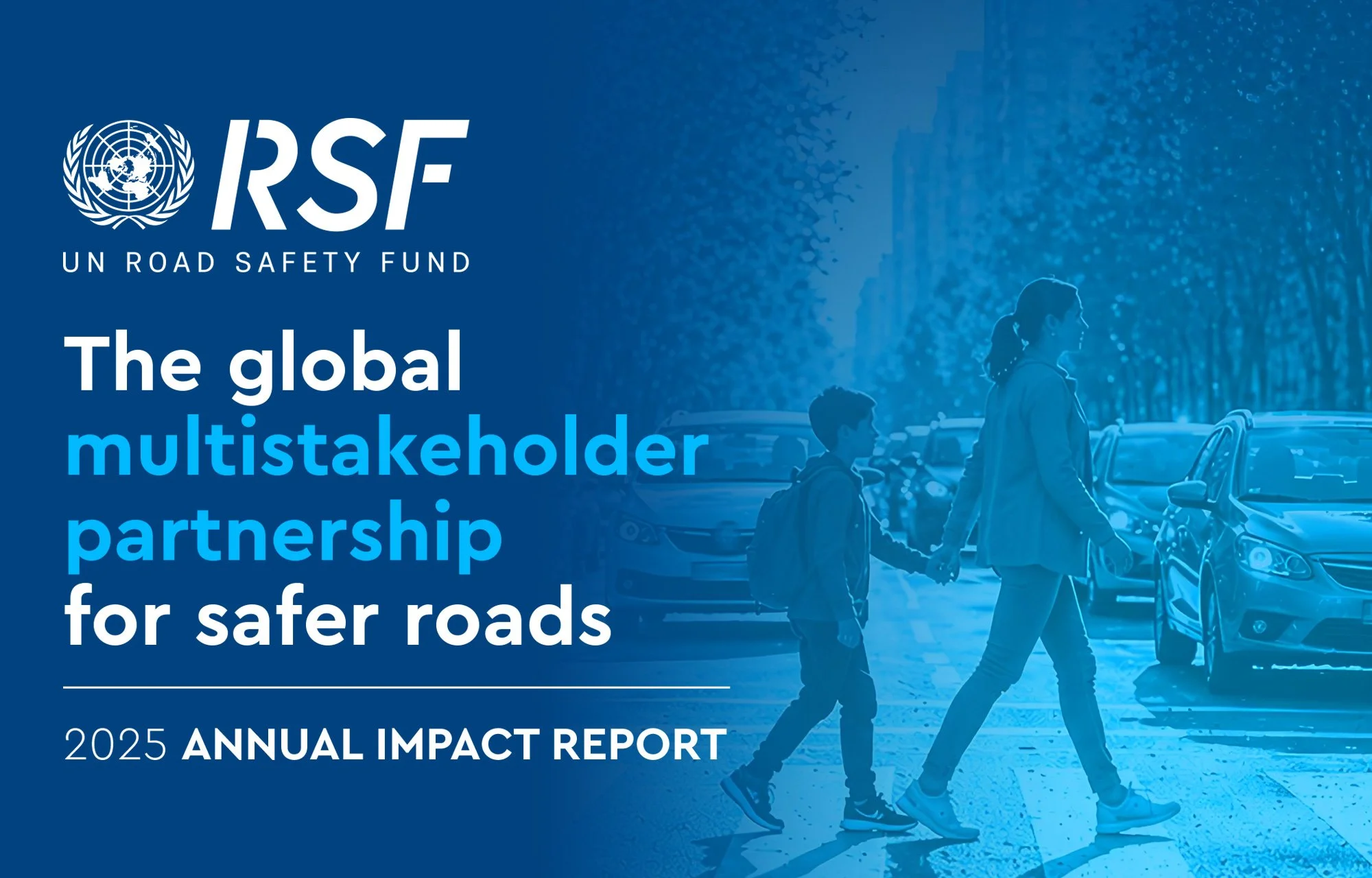
The UN Road Safety Fund (UNRSF) has published its 2025 Annual Impact Report, highlighting the global reach of its road safety programmes as the Decade of Action for Road Safety enters its final stretch.
Since its launch in 2018, the UNRSF has mobilised USD $39 million for road safety initiatives worldwide, leveraging an additional USD $1.37 for every dollar invested. The funding has supported 56 projects across more than 100 countries and helped 88 municipalities strengthen their road safety systems.
“The results presented in this report reflect a partnership that is demonstrably greater than the sum of its parts,” Nneka Henry, Head of the UN Road Safety Fund Secretariat stated.
“By bringing together 21 United Nations entities alongside governments, civil society and private-sector partners within a single, coordinated framework, the UN Road Safety Fund enables a breadth of geographic reach, technical expertise and financial leverage that no single organisation - regardless of mandate or capacity - could achieve independently.”
Five pillars of action
The UNRSF operates as a global road safety financing mechanism focused on five core areas: high-risk factors, safer vehicles, road safety systems, safer and greener streets and emergency care.
The report highlights a series of regional success stories. In Cambodia, more than 100,000 workers are now covered by factory road safety policies aimed at addressing high-risk factors. Across Latin America, Argentina, Belize, Colombia, Mexico and Paraguay coordinated motorcycle safety legislative roadmaps supported by USD $30,000 in co-financing.
Vehicle safety initiatives have also accelerated. An estimated 200 million people across 17 African countries are benefiting from improved vehicle safety standards while Malaysia, the Philippines and Vietnam took action on motorcycle anti-lock braking system (ABS) technology in 2025.
In India, four states implemented road safety action plans covering around 200 million people. In Brazil, an initial USD $163,000 in catalytic funding helped unlock USD $1.5 billion for wider road safety action. Meanwhile, reforms to crash data systems in Yerevan, Armenia, contributed to an 18% reduction in repeat speeding violations.
Infrastructure and urban safety projects also featured prominently. In Tanzania, 10,000 kilometres of roads were assessed as part of a new national infrastructure safety strategy, while more than USD $5 million was mobilised for urban road safety programmes across 22 African cities. A pilot safety corridor in Kenya recorded a reduction of more than 10% in road fatalities.
Emergency care systems saw progress too. Across Latin America, 816 emergency care professionals were trained while Costa Rica, Mexico and Colombia committed domestic funding to sustain emergency care training beyond the initial project period.
Looking ahead
As the Decade of Action enters its final phase, the UNRSF reports that its focus from here will be on three priorities: targeting advocacy to secure sustainable domestic financing for road safety, embedding the Safe System approach into national policy and integrating road safety into the broader SDG initiatives.
The Fund plans to increase engagement with finance ministries, parliamentarians and senior policymakers to translate political commitments into long-term domestic investment. It also aims to strengthen coordination across transport, infrastructure, enforcement and public health agencies while ensuring vulnerable road users remain central to policymaking.
At the heart of the report is a single message. Road safety is not a standalone transport issue but a global development challenge that cuts across public health, economic resilience and sustainable mobility - and one whose lasting success will be determined by coordinated action across sectors, institutions and governments globally.