Top safety for Kia EV4 and Volkswagen New Tiguan, while Toyota disappoints
The New Car Assessment Programme for Latin America and the Caribbean, Latin NCAP, publishes today the eight crash tests results for 2025 with five stars for the recently launched Volkswagen New Tiguan, five stars for the Kia EV4 and disappointing two stars for the Toyota Yaris Cross and for the Toyota Yaris Sedan /Hatchback.
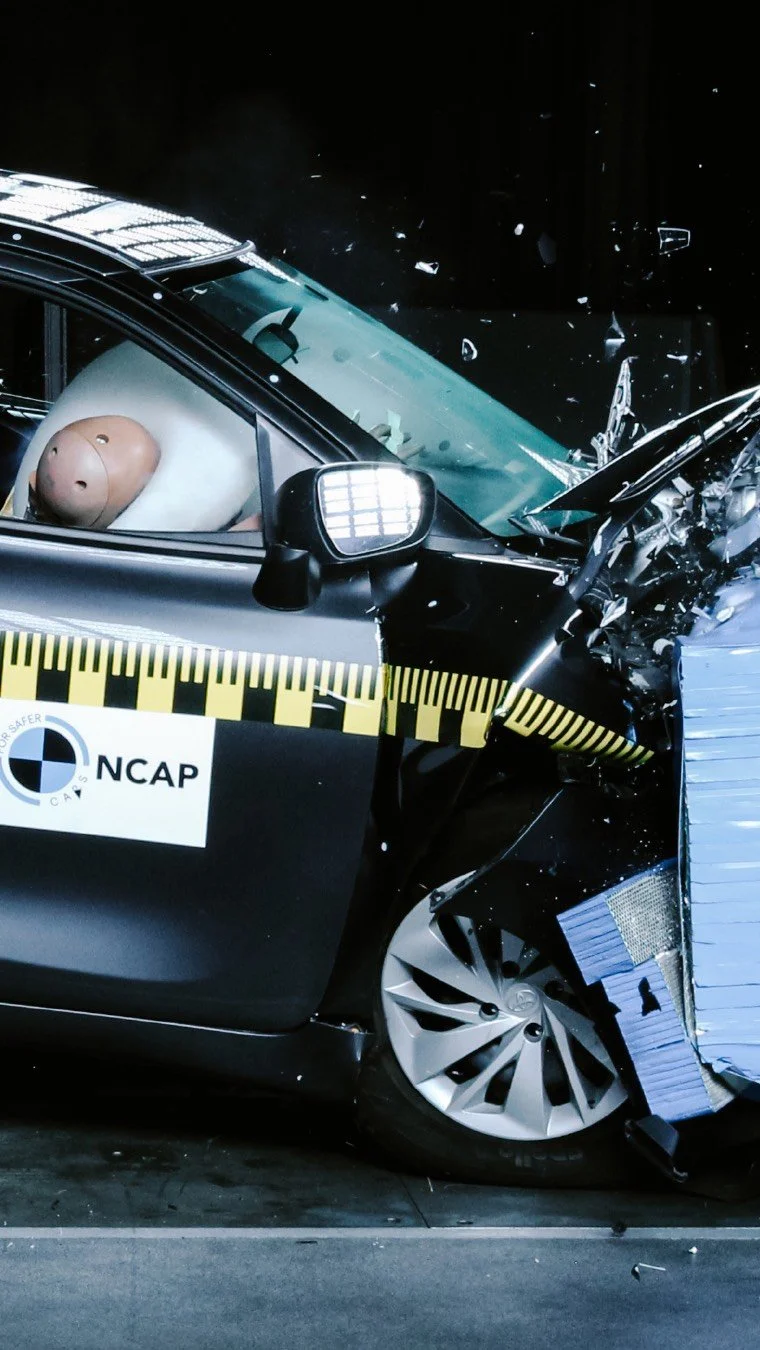
The Volkswagen New Tiguan, produced in Mexico, achieved five stars. The New Tiguan that offers 6 airbags, Electronic Stability Control (ESC) as standard and ADAS technologies as standard, achieved 85.79% in Adult Occupant, 80.96% in Child Occupant, 79.69% in Pedestrian Protection and Vulnerable Road Users and 92.15% in Safety Assist. The car was assessed in frontal impact, side impact, side pole impact, whiplash, pedestrian protection, ESC, Autonomous Emergency Braking (AEB) for Vulnerable Road Users (VRU), AEB City, AEB Interurban, Speed Assist System (SAS), Lane Support Systems (LSS) and Blind Spot Detection (BSD). AEB, LSS and BSD technologies are standard fitted in all versions, in all markets.
The New Tiguan showed an unstable structure combined with an unstable footwell area in the frontal crash that explains the low score in adult protection in frontal test, which is compensated by the good performance of restraint systems such as seat belts and airbags. On the other hand, side impact and side pole impact scenarios offered full score, as well as a good performance in the whiplash test. The child occupant score was almost full,only negatively affected in the point loss for the potential risk as a result from the interaction of the curtain airbag and rearward facing child passengers in the rear seat. Pedestrian protection showed a robust performance by a good combination of passive and active safety. Active safety showed good scoring explained by the robust performance and standardization of AEB, LSS and BSD. Structural performance and curtain airbag deployment should be improved to clear any potential risks. The model was tested as a voluntary decision of the manufacturer.
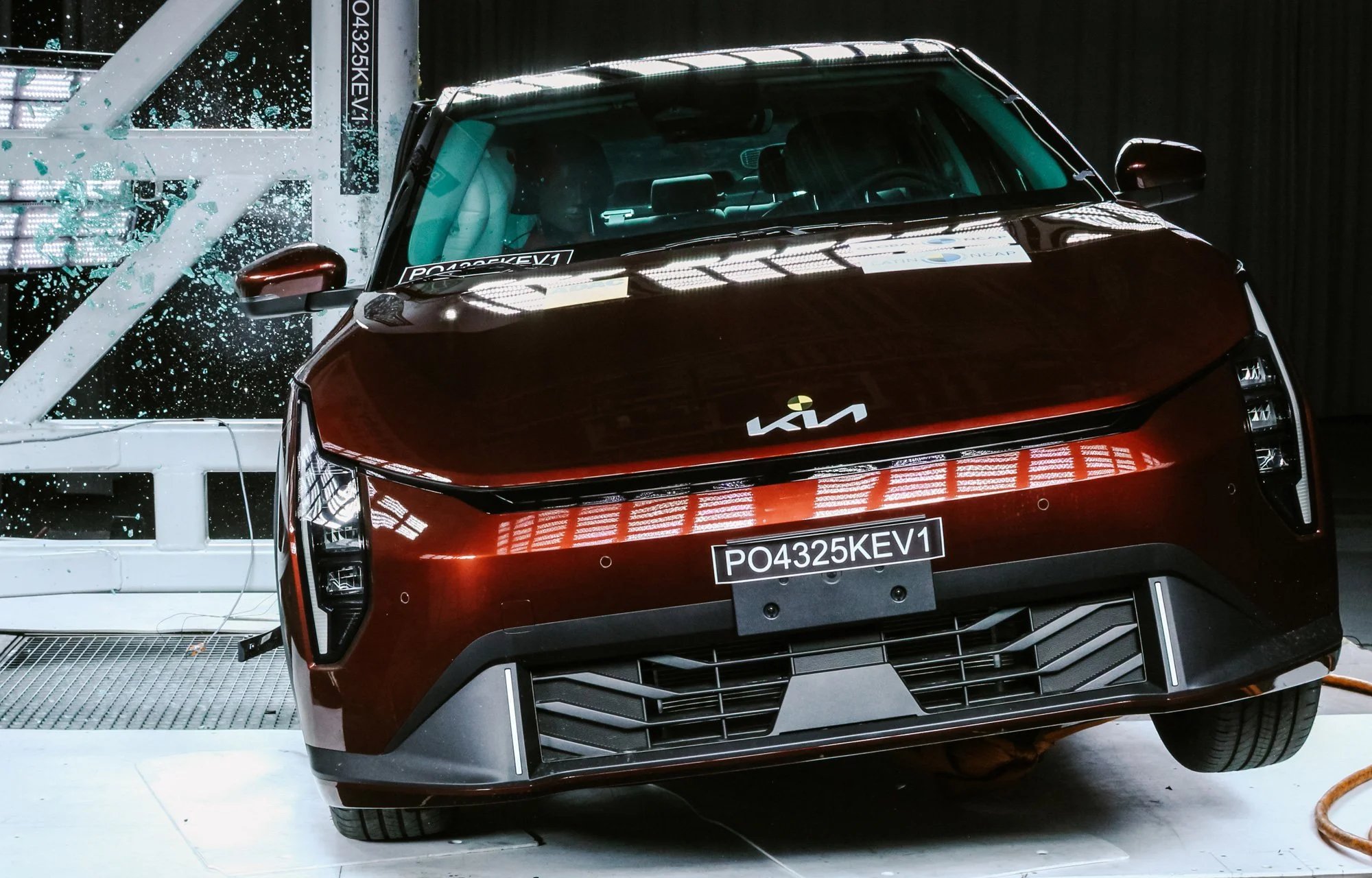
The Kia EV4, produced in South Korea, achieved five stars. The electric Kia EV4 offers 6 airbags, Electronic Stability Control and ADAS technologies as standard, achieved 82.86% in Adult Occupant, 91.84% in Child Occupant, 69.23% in Pedestrian Protection and Vulnerable Road Users and 98.26% in Safety Assist. The car was assessed in frontal impact, side impact, side pole impact, whiplash, pedestrian protection, ESC, Autonomous Emergency Braking (AEB) for Vulnerable Road Users, AEB City, AEB Interurban, Speed Assist System, Lane Support Systems and Blind Spot Detection. AEB and LSS are standard fitted in all versions, in all markets.
The EV4 showed a stable structure combined with an unstable footwell area in the frontal crash. Side impact protection for adult was full while in the pole impact scenario it showed weak protection to the chest. Whiplash protection was good. The child occupants showed full protection in front and side impacts and full score in Child Restraint Systems (CRS) installation. Pedestrian protection showed majority of marginal, weak and poor protection to the head and to the upper leg to the edges, while good protection to the upper leg in the centre of the vehicle and to the lower leg. In combination with a robust AEB VRU performance, the protection for the pedestrian and VRU achieved the necessary points for a five star result. Active safety showed good scoring explained by the robust performance and standardization of AEB and LSS, and almost standard BSD. The model was tested as a voluntary decision of the manufacturer.
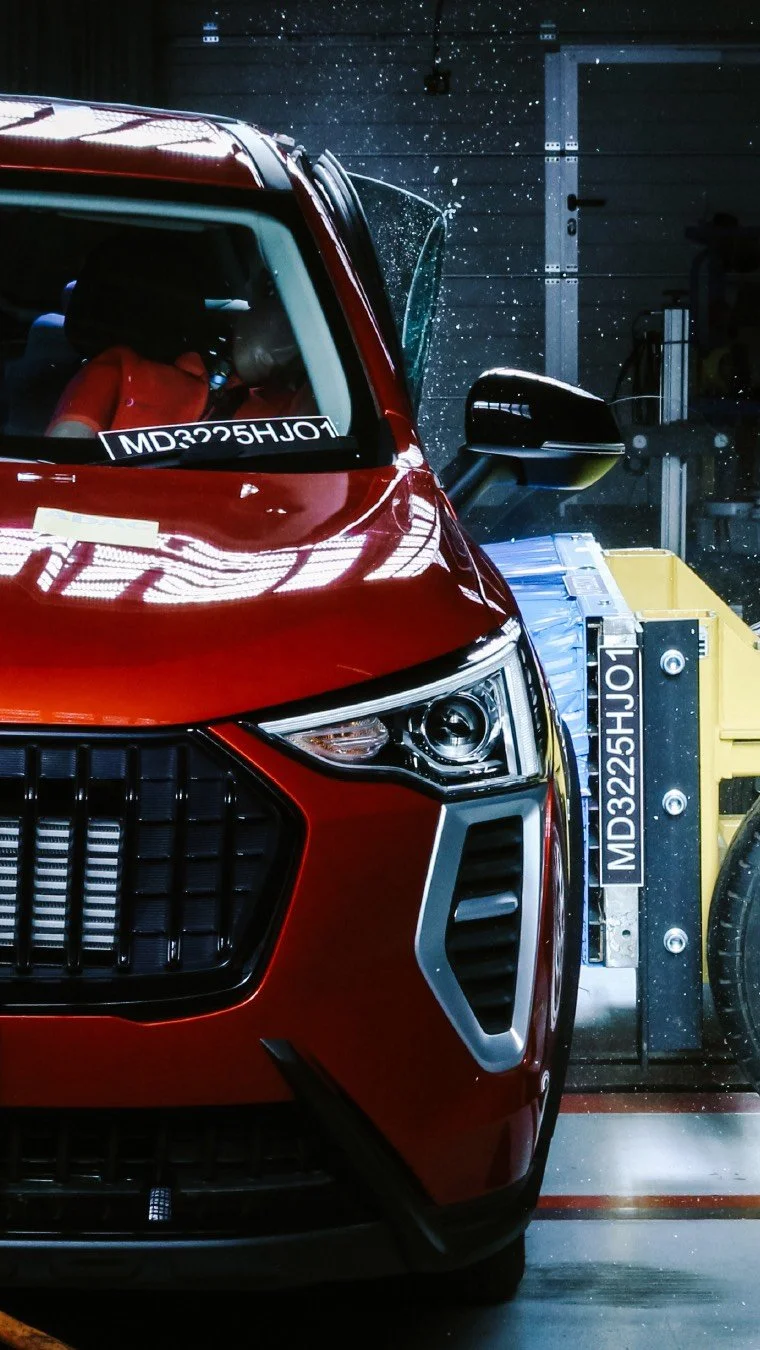
The Toyota Yaris Cross, produced in Indonesia and Brazil, achieved two stars. The Yaris Cross that offers 6 airbags and Electronic Stability Control (ESC) as standard achieved 77.01% in Adult Occupant, 69.29% in Child Occupant, 55.60% in Pedestrian Protection and Vulnerable Road Users and 58.14% in Safety Assist. The car was assessed in frontal impact, side impact, side pole impact, whiplash, pedestrian protection, and ESC.
The Yaris Cross showed a stable structure combined with a stable footwell area in the frontal crash. The driver chest showed marginal protection in the frontal and pole impact tests. Child occupants showed full protection having been installed rearward facing using ISOFIX anchorages following global best practices. The lack of passenger airbag disabling switch to disconnect the airbag when installing a rearward facing CRS in the passenger seat, and the lack of warning marking that meet Latin NCAP requirements explains the low score for Child Occupant Protection. Pedestrian protection showed average performance explained by the lack of AEB VRU points. The lack of Speed Assistance and not being able to collect points due to the AEB availability conditions, explain the two star result.
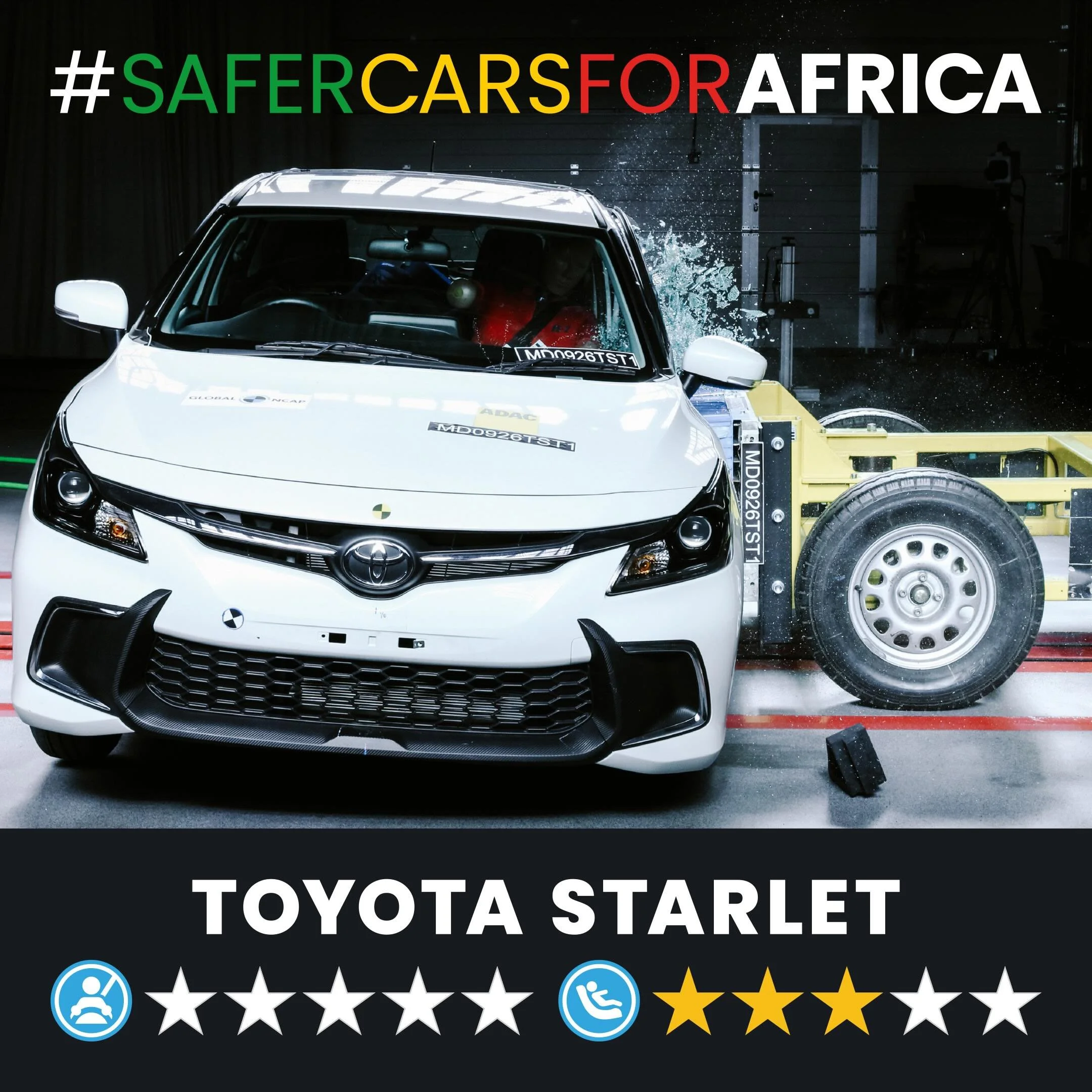
The Toyota Yaris Sedan/Hatchback, produced in Thailand and Brazil, achieved two stars. The Yaris Sedan and Hatchback that offers at least 6 airbags and Electronic Stability Control as standard achieved 65.79% in Adult Occupant, 63.85% in Child Occupant, 53.59% in Pedestrian Protection and Vulnerable Road Users and 58.14% in Safety Assist. The cars were assessed in frontal impact, side impact, side pole impact, whiplash, pedestrian protection and ESC. Latin NCAP assessed the sedan version of the Yaris, which is a more updated Daihatsu engineered vehicle and the Hatchback version, which is a not so recent evolution.
The Yaris Sedan/Hatchback showed unstable structure and unstable footwell area in the frontal crash. The driver chest showed marginal protection in the frontal crash test. Child occupants showed full protection having been installed rearward facing using ISOFIX anchorages following global best practices and using good performing CRS, however, the lack of passenger airbag disabling switch to disconnect the airbag when installing a rearward facing CRS in the passenger seat explains the low score for child occupant protection. Pedestrian safety showed average performance explained by the lack of AEB VRU points. The lack of Speed Assistance and not being able to collect points due to the AEB availability explain the two star result. The result is also valid for the version sold in Colombia, imported from France. The model was tested as a voluntary decision of the manufacturer.
Latin NCAP tests the most basic passive safety specification of the models and strongly recommends to buy those versions equipped with tested good performing ADAS technologies, such as AEB.
Alejandro Furas, Secretary General of Latin NCAP said:
“The Volkswagen New Tiguan renews the five stars, although improvements should be addressed in terms of structural performance and airbags deployment. It is very important that Volkswagen has decided to offer AEB as standard in all of the markets of the region. Kia’s third five-star result in 2 years shows a solid commitment of the manufacturer towards safer cars and becomes the second BEV that reached five stars in Latin NCAP. On the other hand, Toyota surprised with a very poor performance in many aspects simultaneously in both models Yaris and Yaris Cross. In contrast with its competitors, like Renault with the Kardian and Volkswagen with the Tera, Toyota does not seem to prioritize Latin American’s safety as expected. It is surprising that after being a leader in the region for safer cars, Toyota has relaxed so much its internal standards and brings such relevant models to the market with only two stars. Latin NCAP urges Toyota to engage again with good safety performances and offer top standard safety to Latin American and Caribbean consumers. These results confirm the need for a safety labelling that includes the star rating results of Latin NCAP.”
Stephan Brodziak, Latin NCAP Chairman said:
“We recognize Volkswagen and Kia for these five-star results, which show that when the automotive industry makes a genuine commitment to protecting lives, improvements reach the market quickly and generate direct benefits for all consumers in the region. These performances send a clear market signal: vehicle safety is now a decisive factor, and brands that invest in high standards earn trust and recognition.
Unfortunately, Toyota’s results in this round confirm a worrying trend. In recent years, Latin NCAP has repeatedly demonstrated performances below expectations for the brand, including low levels of protection for adult and child occupants and the absence of key active safety technologies in popular, high-demand models. The new two-star ratings for the Yaris Cross and the Yaris Sedan/Hatchback deepens this deterioration and shows that Toyota is not responding to the need for car safety protection that the region requires and that its competitors are already addressing. Latin NCAP demands an immediate course correction from Toyota. Consumers in Latin America and the Caribbean deserve vehicles that effectively protect their lives, not products that compromise the integrity of families due to commercial or technological decisions that fall short of current international standards. Toyota has the technical capacity and the resources to lead in car safety; it is time for the company to act accordingly. The region cannot wait any longer.”
Volkswagen Tiguan (6 airbags)
Read the full crash test report
Watch the crash test video
Download crash test images
Kia EV4 (6 airbags)
Read the full crash test report
Watch the crash test video
Download crash test images
Toyota Yaris Cross (6 airbags)
Read the full crash test report
Watch the crash test video
Download crash test images
Toyota Yaris Sedan/Hatchback (6 airbags)
Read the full crash test report
Watch the crash test video
Download crash test images
FOLLOW US
YOUTUBE