African nations unite in Accra to bolster motorcycle helmet safety
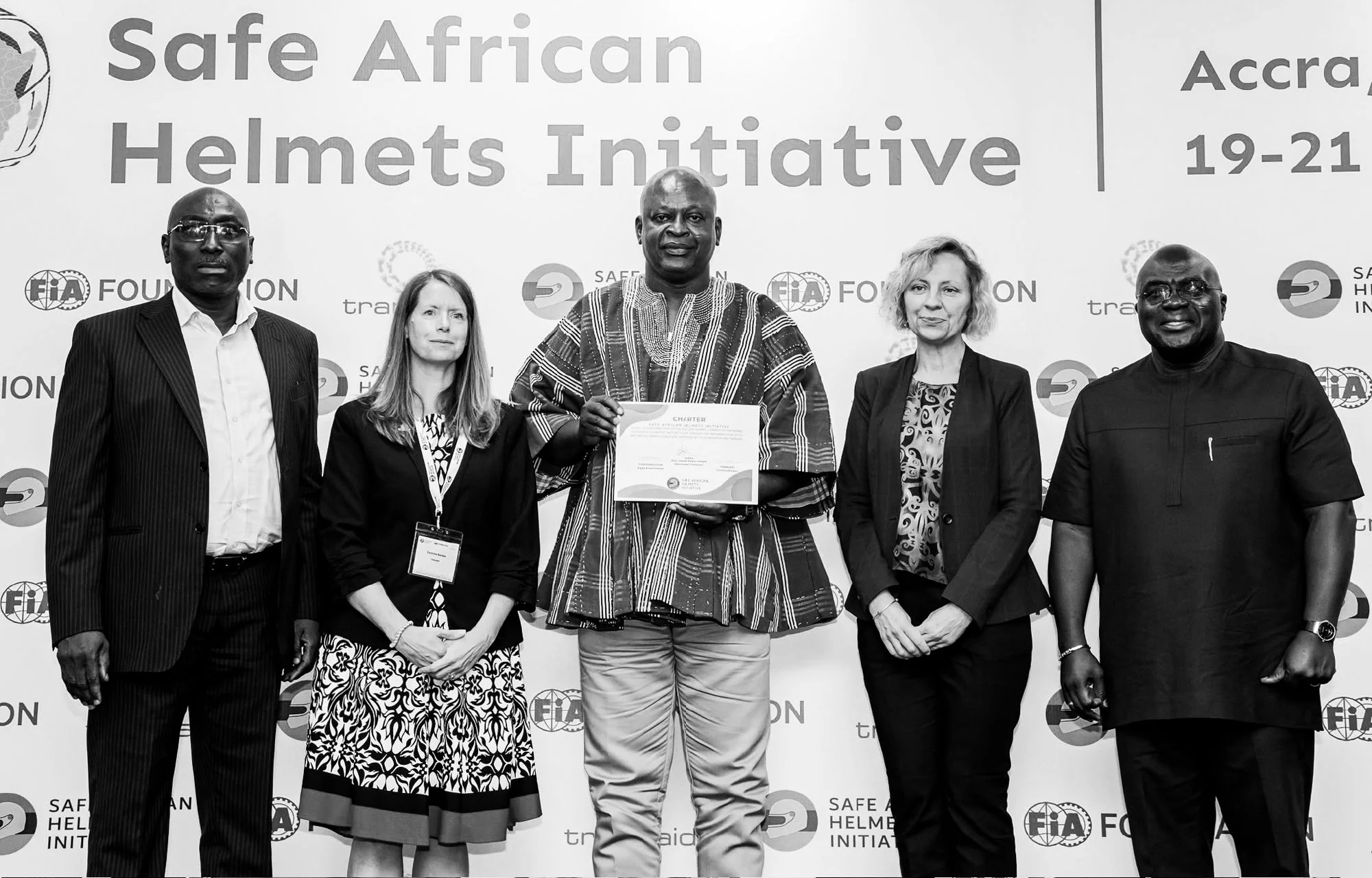
African nations joined forces in Accra last month to bolster motorcycle helmet safety across the continent.
Motorcycle numbers have surged across Africa, increasing from around seven million in 2011 to 30 million today. The safety of these riders remains a critical issue. Motorcyclists account for around 35% of all road deaths on the continent and over one quarter in Ghana.
A large part of the solution is in helmets. When worn correctly, a quality helmet can reduce the risk of death by around six times and reduce head injuries by 69%. Helmets are uncompromisable safety devices proven to save lives.
It’s for that reason that African countries convened at the Safe African Helmets Initiative (SAHI) Summit in the Ghanaian capital, hosted by the FIA Foundation, Transaid and Ghana’s National Road Safety Authority (NRSA).
The three-day summit built on the inception of SAHI in 2024, which aims to provide a pan-African platform for identifying challenges and best practices in helmet safety through national advocacy, data collection, helmet testing and enforcement.
The Summit agenda up close
Policymakers, road safety experts, practitioners and industry representatives from nations including Ghana, Uganda, Benin, Rwanda, Kenya, Cameroon, Nigeria and Ethiopia became a unified voice to address the crisis of motorcycle deaths and injuries and draw a life-saving path forward.
Speaking at the event, Ghana's Minister of Transport Hon. Joseph Bukari Nikpe called it a “bitter irony” that motorcycle riders may obey the laws by wearing a helmet “yet perish because the helmet itself was not designed to save a life”.
“The Safe African Helmet Initiative is more than a technical engagement. It is an expression of continental solidarity: no African country will resolve this problem alone. It is when we work together that we will be able to overcome this,” Hon. Joseph Bukari Nikpe said.
On the Summit’s agenda was an examination of Ghana’s own progress in motorcycle helmet safety, a spotlight on best-practices across African countries and a series of technical workshops on quality helmet standards.
Sessions also examined the challenges of enforcing helmet standards as well as testing laboratories, market surveillance, research, financing and procurement and public-private sector coordination.
Participants were invited to join demonstrations of Ghana’s ‘Traffitech’ police enforcement system, as well as practical problem clinics focused on strengthening national systems for helmet testing, enforcement and surveillance.
Building on Africa’s road safety landscape
The Summit follows positive progress from Ghana in motorcycle safety.
Last year, Ghana’s Parliament adopted major new road traffic legislation which included strict rules on motorcycle helmet standards and came into force early this year. To support implementation of the new helmet standard, Transaid is providing technical assistance to the Ghana Standards Authority, NRSA and the Ministry of Trade, Agribusiness and Industry under the SAHI effort.
During the Summit, the FIA Foundation, Transaid and Ghana’s Minister of Transport signed a charter which affirmed a shared commitment to continuing Ghana's motorcycle helmet progress.
“Motorcycle safety requires action across the whole system - from legislation and standards to testing, enforcement, procurement and access to affordable quality helmets,” FIA Foundation Programmes Director Aggie Krasnolucka said. “SAHI provides an important space for countries to share practical experience and work together on the solutions needed to prevent deaths and serious injuries.”
The urgency of road safety action across Africa cannot be overestimated. While global deaths have slightly declined, the WHO African Region saw a 17% rise in traffic deaths in the decade to 2021, reaching nearly 250,000 fatalities every year.
Against this backdrop, Chief of Staff to the President of Ghana Hon. Julius Debrah underlined the critical role that motorcycles have to play in pushing progress forward.
"Motorcycles have become indispensable across our continent. They connect communities, move goods, help traders reach markets and create livelihoods for many young people. In some places, they are the quickest way to reach a school, a clinic or a workplace.
“This is Africa's mobility reality,” Hon. Julius Debrah said in his opening address.
“Together we can advance the global goal of halving road deaths and injuries by 2030 and build transport systems that place human life at the centre. Every head deserves a safe helmet, every journey deserves a safe return and every life saved is a family kept home."