Safety 2026: Global injury prevention takes centre stage in Cape Town
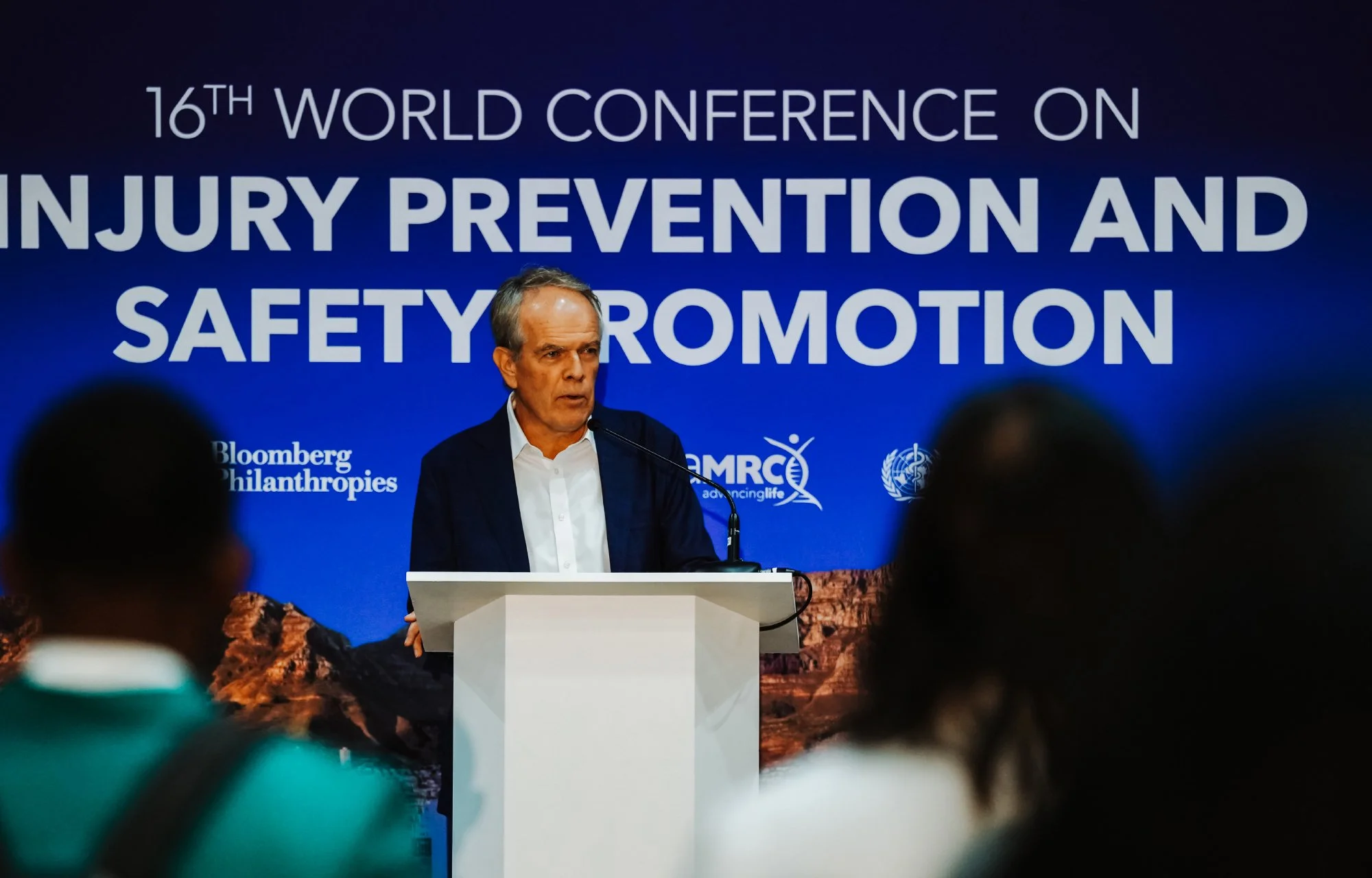
This week masses of public health experts, researchers and policymakers from around the world descended on Cape Town for Safety 2026, the 16th World Conference on Injury Prevention and Safety Promotion.
Hosted by the Foundation for Professional Development (FPD) in collaboration with the World Health Organization (WHO), South African Medical Research Council (SAMRC) and the National and International Organizing Committees, Safety 2026 brought together policymakers, researchers, practitioners and civil society from more than 80 countries and 480 organisations to prevent violence and injuries across every aspect of life.
Mobility is a fundamental part of that picture. For Global NCAP, Safety 2026 provided a crucial platform to put vehicle safety firmly within the wider injury prevention agenda, on a continent that accounts for nearly 20% of road deaths globally despite being home to 15% of the world’s population.
Alongside climate-related injury, urban design, social isolation, digital harm, online violence and the implications of many other rapidly evolving technologies, the conference brought together an exceptionally broad range of disciplines and this in itself is what crafted its central message: the causes of injury do not sit neatly within individual sectors and neither can the solutions.
Safer vehicles, safer roads and safer transport systems must be considered alongside the wider social, environmental and structural factors that shape people's exposure to risk.
Mobility in focus
Road traffic injuries remain among the leading causes of death in South Africa, making safer transport systems a critical part of any comprehensive approach to injury prevention.
That’s why Global NCAP hosted its Forum for Safer Mobility in Cape Town to coincide with Safety 2026.
Held under the theme ‘Democratising Vehicle Safety in Africa’, the Forum is the second edition of Global NCAP’s international series which unites the public and private sector to address the most pressing challenges in vehicle and road safety.
The session heard from some of the industry’s most influential road safety advocates on how vehicle safety must be democratised globally. Global NCAP demonstrated the impact of the solutions brought to the table with the release of its latest #SaferCarsForAfrica crash test results for the Toyota Starlet, revealing a much improved result for one of South Africa’s most popular vehicles.
Mobility took focus elsewhere on the Safety 2026 agenda. Global NCAP was proud to hear powerful sessions delivered by our partners, including Bloomberg Philanthropies and the FIA Foundation.
In addition to its welcome reception, Bloomberg Philanthropies, together with Johns Hopkins University, delivered a session on the Global Road Safety Leadership Institute, an educational course which has trained more than 1,000 road safety professionals from across 80 low and middle-income countries. With a decade of the course celebrated this year, the session saw panellists speak on the successes, challenges and key lessons learned from the Global Road Safety Leadership Institute accompanied with a forward-looking reflection into the future of road safety.
A separate session titled ‘Youth-Led Action in Urban Safety: A Driver for Social Impact and Equity’ was delivered by the WHO, Youth for Road Safety (YOURS), the FIA Foundation and the Global Infrastructure Basel Foundation, exploring the leading role young people can play in shaping safer and more equitable urban environments.
Two legacy initiatives from Safety 2026
Two initiatives that emerged from the conference aim to translate the principles of Safety 2026 into long-term action.
The Ubuntu Cape Town Declaration sets out shared global principles for preventing violence and injury. It affirms safety as a human right and collective responsibility, calling on governments and society to address the causes of harm and turn evidence into equitable, coordinated action.
That global Declaration is complemented by the Safety 2026 National Consensus Plan, which translates these priorities into a practical framework for South Africa.
Developed through the National Action Group and a series of Technical Working Groups, the Plan provides a systematic review of existing policies, strategies and international commitments to determine what’s working, what’s not and what must change to reduce violence and injuries.
The framework clarifies the roles and responsibilities of different stakeholders including national and local government, health and education systems, civil society and the private sector.
At the heart of both initiatives is the conference theme and African philosophy of ‘Ubuntu’, centred on the idea of ‘I am because we are’.
It’s a principle that underpins the conference’s headline message: safety cannot be addressed in isolation. It requires collective leadership, coordinated action and solutions that extend beyond sectors, borders and governments.
In the spirit of Ubuntu
What Safety 2026 made clear is that injury prevention is a global health priority and one that cannot be solved sector by sector.
The sectors that do not traditionally work together must find a way to do so. Solutions must transcend borders, disciplines and governments, recognising that the risks people face are shaped by social, environmental and economic conditions while the consequences of injury can reverberate across communities, countries and generations.
The week in Cape Town reinforced the need to move beyond siloed approaches and towards integrated frameworks in which the public and private sector work together. Whether on our roads, in our cities or across wider society, preventing injuries requires collective leadership, coordinated action and solutions that break down the barriers between sectors, borders and global governments.
“Injuries and violence are neither random nor inevitable,” said Prof Richard Matzopoulos, Director of the SAMRC’s Burden of Disease Research Unit and Co-Chair of the National Organising Committee.
“They are shaped by inequality, gender, alcohol-related harm, unsafe environments and failures in the systems that should prevent harm. The evidence already tells us much about what works. The challenge now is to connect that evidence to policy, implementation and accountability across every sector that influences safety.”