Euro NCAP welcomes Allianz to Safer Trucks Programme
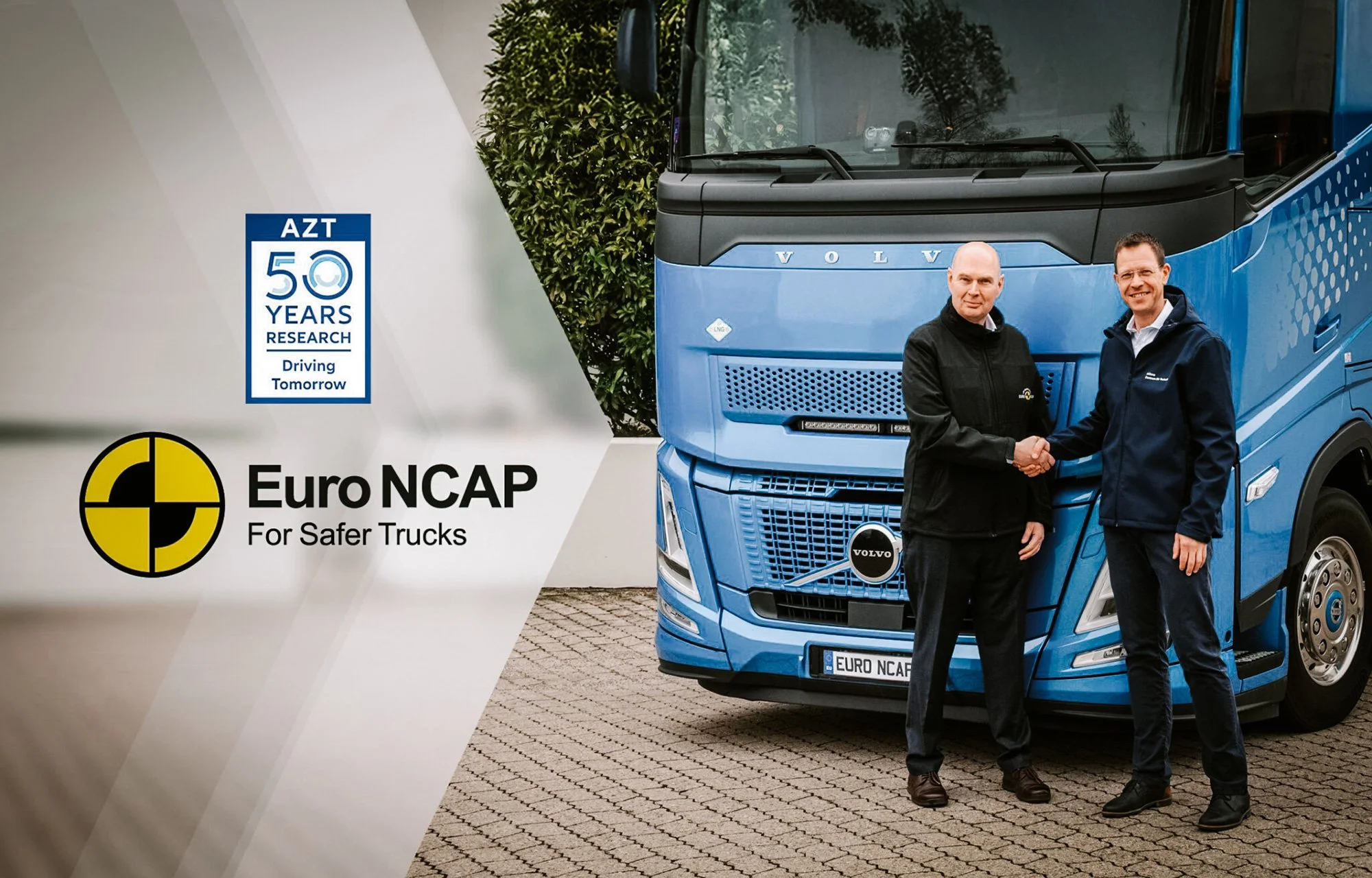
Euro NCAP has announced that Allianz, one of the world’s largest insurance companies, has joined its Safer Trucks programme as an Associate Member.
Launched in 2024, the Safer Trucks programme provides independent safety ratings for heavy goods vehicles. In its first two years, it has assessed nearly 30 truck models, identified key safety gaps and helped accelerate the uptake of advanced safety systems across the freight sector.
Allianz operates in more than 70 countries and serves millions of corporate and commercial vehicle clients. Through its participation, the company will bring insights from risk trends and claims data to deepen understanding of how safety technologies perform in real-world conditions.
“We are delighted to welcome Allianz to the Safer Trucks programme. Their expertise in risk and casualty analysis adds a valuable new dimension to our multi-disciplinary approach,” Matthew Avery, Director of Strategic Development at Euro NCAP, said.
“Safer Trucks is designed not only to benchmark safety performance but also to catalyse improvements in truck design and technology. By integrating risk insight from Allianz with our independent testing data, we aim to accelerate safety innovation across the commercial vehicle sector.”
Allianz’s membership highlights the growing importance of linking independent safety assessments with insurance analytics, with the partnership reflecting a broader shift towards collaboration between safety organisations, insurers, manufacturers and fleet operators.
The need for progress remains clear. In crashes involving heavy goods vehicles, around 90% of those killed are occupants of other vehicles or vulnerable road users like pedestrians and cyclists. At the same time, freight transport accounts for approximately 95% of goods movement across the EU, underlining the scale and urgency of improving commercial vehicle safety.
Christian Sahr, Managing Director at the Allianz Center for Technology, said: “Our accident research shows that modern safety systems in trucks can significantly reduce the number of serious accidents. In addition to protecting life, avoiding accidents brings economic benefits for fleet operators because a fleet with lower repair and downtime costs is more efficient, offers better working conditions for drivers and has significantly lower insurance premiums.
“Through our cooperation with Euro NCAP, we see excellent opportunities to use our combined expertise to improve the market penetration of safety systems that are already available and that contribute to accident prevention.”
Quick glance: Euro NCAP’s 2026 Media Launch Event
A busy month for the organisation, Euro NCAP also hosted its 2026 Media Launch Event in March which brought together 16 international media outlets to preview the next evolution of its vehicle safety assessment framework.
Joined by ANCAP Safety, the event introduced the updated four Stages of Safety that will underpin the 2026 protocols: Safe Driving, Crash Avoidance, Crash Protection and Post-Crash Safety.
Journalists were given first-hand insight into the testing process, observing over 100 vehicles that were subjected to four major crash tests which form a core part of Euro NCAP’s ratings.
A live crash test demonstrated the 50 km/h impact of a ZEEKR X colliding into a new type of deformable barrier which is currently undergoing research for use with 2029 protocols. Media also witnessed the assessment of the latest THOR-05 small female crash test dummy, also in evaluation for future use.
Moving beyond the laboratory, a road trip delivered in partnership with IVEX showcased how driver assistance systems perform in real-world conditions. Vehicles from Kia, Volvo, Toyota, Volkswagen and Mazda were equipped with LiDAR, radar and camera-based “ground truth” sensors to monitor system performance.
At the Ford Lommel Proving Ground, further workshops focused on crash avoidance technologies in cooperation with Renault Group and Ford Motor Company. Meanwhile, Mobileye and South Depthsensing Solutions demonstrated the latest developments in driver and occupant monitoring.
In the discussion room, Euro NCAP’s General Secretary Michiel van Ratingen outlined the Vision 2030 roadmap, covering upcoming protocols in 2026, 2029 and beyond. The conversation explored the growing role of AI, expanded passive safety testing and the increasing importance of virtual development tools.
Michiel Van Ratingen said: “We are seeing the virtual component - modelling and simulations - become a more important component of our crash testing. It’s new, challenging and a lot of work but we are hopeful it will provide another significant step forward for safety.”
For many attending journalists, the event offered a rare first-hand look at both established and emerging safety technologies with proven impact, while discussions around system usability, data and consumer feedback underscored a clear shift towards meeting evolving consumer expectations.