Euro NCAP's 2025 InReview: A Landmark Year for Vehicle Safety Sets the Stage for an Even Safer Future
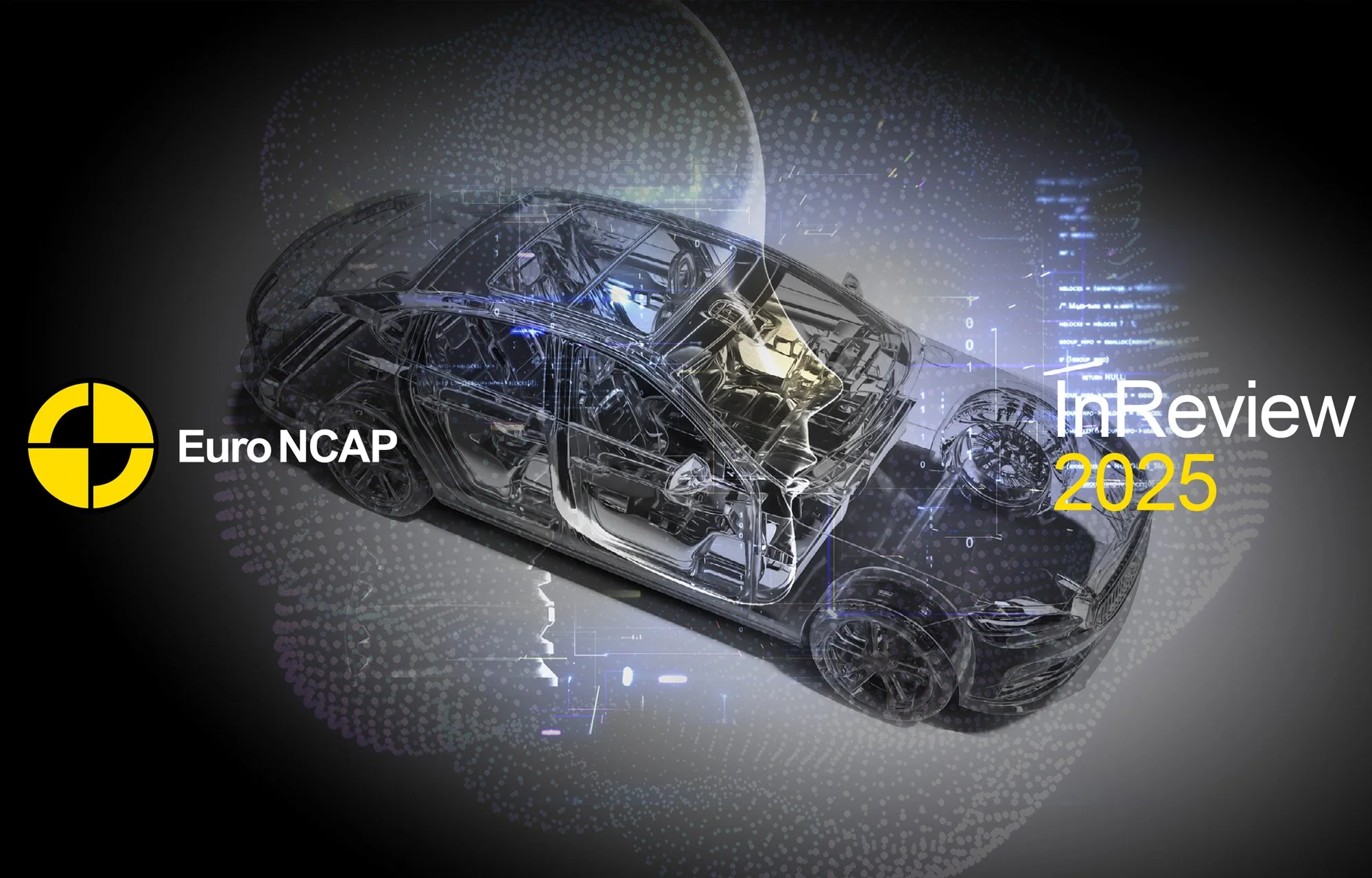
Euro NCAP has closed the chapter on what it describes as its most consequential year since the organisation was established nearly three decades ago. The 2025 InReview report, published in January 2026, paints a picture of an organisation operating at full throttle, testing more vehicles, reaching more people, and wielding greater influence over the global automotive industry than ever before.
Record Testing Output
Despite a challenging economic landscape for the European automotive industry, 2025 saw Euro NCAP deliver a record 108 assessments of new cars from more than 50 global brands. That figure alone underscores the scale of the organisation's ambition, but the quality of the results is equally striking. A remarkable 98 per cent of all models tested achieved four stars or more — a testament to how significantly safety standards have risen across the industry since Euro NCAP first began publishing ratings in the late 1990s.
The breadth of manufacturers now submitting vehicles for assessment has also widened considerably, with a surge of new market entrants, particularly from the electric vehicle (EV) sector, participating for the first time. Emerging EV brands largely achieved excellent safety scores, signalling that newer players in the market are taking consumer safety as seriously as established names.
Unprecedented Public Reach
The organisation's societal influence extended well beyond the test track in 2025. Euro NCAP recorded more than 421,000 media interactions, a 54 per cent increase from the previous year. Digital engagement followed suit, with audiences flocking to the organisation's online platforms in record numbers. The most-watched YouTube video of the year accumulated nearly 450,000 views, while the top-performing social media post generated over 581,000 impressions. Across all platforms, total page and profile impressions reached nearly 3.8 million, a 47.7 per cent rise compared to 2024.
These numbers reflect a growing public appetite for transparent, independent safety information at a time when consumers are navigating an increasingly complex vehicle marketplace.
The Electric Shift
Electrification dominated the testing landscape in 2025. Battery-electric vehicles accounted for over 58 per cent of all cars tested, reflecting the rapid pace at which European drivers are transitioning away from combustion engines. This shift has prompted Euro NCAP to think more holistically about what "safety" means, extending beyond crash performance to encompass environmental responsibility.
The Green NCAP initiative transitioned to a full Life Cycle Assessment approach in 2025, evaluating a vehicle's environmental impact from manufacturing through to end-of-life. This move marks a significant evolution in how the organisation defines its mission, acknowledging that the safety of future generations depends not just on surviving a collision, but on the long-term sustainability of the vehicles we drive.
Real-World Impact
Perhaps most tellingly, 2025 demonstrated that Euro NCAP's assessments carry genuine consequences in the real world. When testing uncovered a seat latch fault in one family hatchback, the manufacturer initiated a redesign of the affected components and issued a market recall specifically in response to Euro NCAP's findings. It is a powerful reminder that independent testing is not merely an academic exercise, it directly protects lives on the road.
Euro NCAP's Safer Trucks Programme also gained significant international momentum, releasing 15 new truck ratings and winning the 2025 Prince Michael International Road Safety Award.
Looking Ahead to 2026
Euro NCAP shows no sign of slowing down. In 2026, a new rating framework will evaluate vehicles across four key stages: safe driving, crash avoidance, crash protection, and post-crash safety, the most comprehensive overhaul the organisation has undertaken to date. The new structure reflects the increasingly sophisticated nature of modern vehicles, many of which now feature advanced driver assistance systems and semi-autonomous capabilities that demand a more nuanced approach to assessment.
As the automotive world continues its rapid transformation, Euro NCAP's 2025 performance makes clear that the organisation intends to remain the gold standard for vehicle safety holding manufacturers to account and ensuring that every driver, passenger, and pedestrian benefits from the safest possible roads.