European Mobility Week: 30 years of vehicle safety legislation in spotlight
For European Mobility Week, Global NCAP joined the Eastern Alliance for Safe and Sustainable Transport (EASST) and the European Bank for Reconstruction and Development (EBRD) to mark three decades of European vehicle safety legislation.
The impact of those three decades is stark.
In 1995, the EU recorded around 64,000 road deaths. Around this time, the European Commission had recently developed its first action plan on road safety which led to the adoption of front and side-impact crash test standards and helped pave the way for the creation of Euro NCAP.
By 2025, annual road deaths across the EU had fallen to around 19,400 - a reduction of roughly 70%.
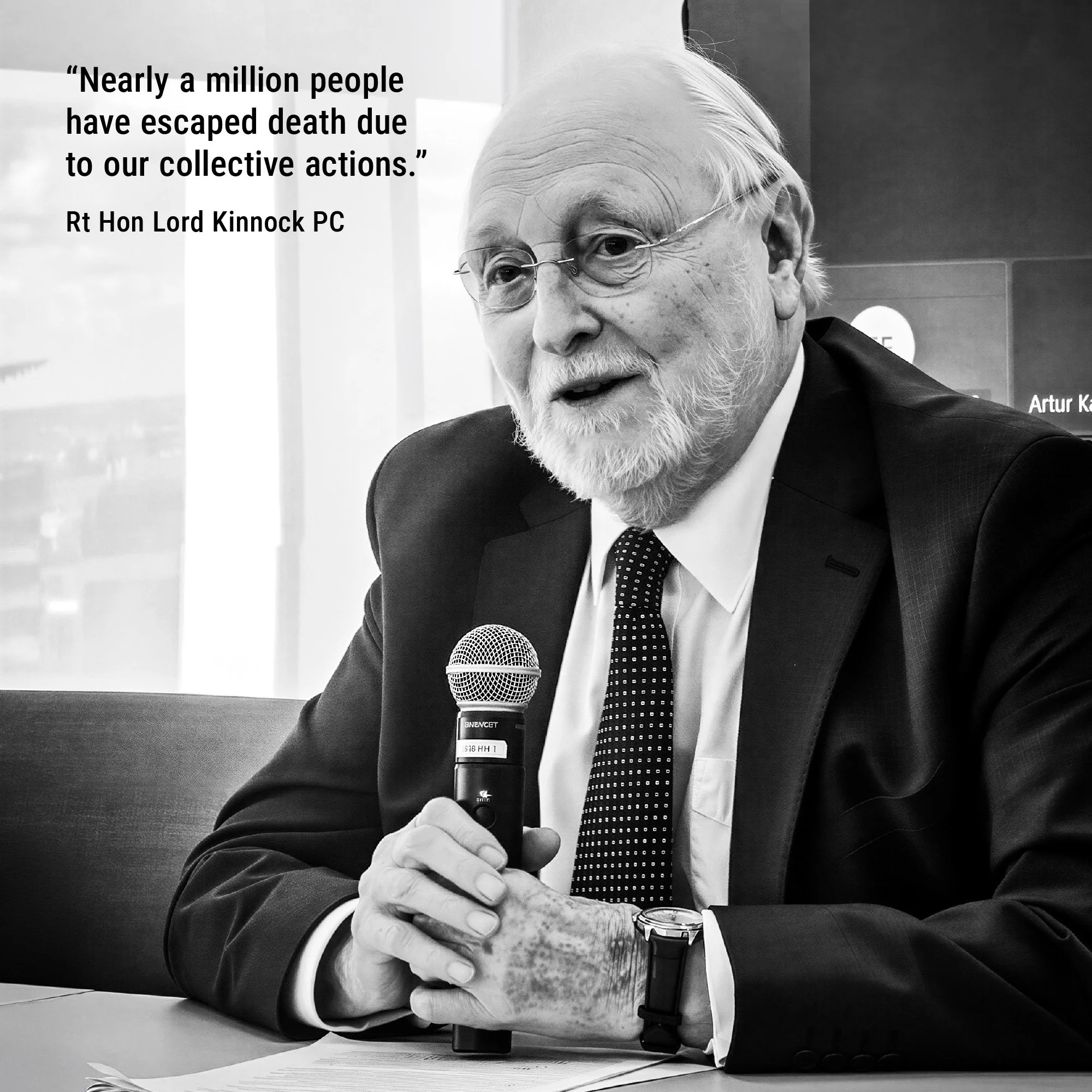
Delivering the keynote, the Rt Hon Lord Kinnock PC, former EU Transport Commissioner and Vice President of the European Commission, emphasised how the measures taken since 1995 have helped spare nearly one million lives.
“Since 1995 the total population of the 27 countries making up the European Union has grown by 50 million. However, the annual number of road fatalities has been reduced by more than two-thirds,” Lord Kinnock PC said.
“Serious injuries have fallen from half a million to around 100,000 people. It is still a priority to get these numbers down. But had it not been for actions to improve road safety in 1995, we would be mourning the loss of over 900,000 additional EU citizens killed on our roads. Nearly a million people have escaped death due to our collective actions.
“That’s something to be proud about.”
What changed?
The progress was not driven by a single intervention but rather by both institutional and industry action centred on vehicle safety alongside the other Safe System elements.
Vehicle safety standards established minimum requirements for cars entering the European market while Euro NCAP’s independent consumer testing programme pushed manufacturers beyond those regulatory requirements by making vehicle safety performance visible to consumers.
Together, regulation and consumer testing helped change the expectations around what a safe vehicle should be.
As well as Euro NCAP, Lord Kinnock paid tribute to civil society organisations including Global NCAP, EASST, the European Transport Safety Council and the FIA Foundation, whose advocacy has relentlessly pushed to keep road safety on the political agenda.
He also highlighted the international reach of European regulation through the ‘Brussels Effect’.
Decisions made at the EU level have helped shape international vehicle standards through the UNECE World Forum for Harmonisation of Vehicle Regulations, now applying to 95% of all new passenger vehicles sold worldwide.
“This is a classic example of the so-called ‘Brussels Effect,’ where standards originating in the EU become applicable globally, creating benefits for consumers worldwide and a level playing field for industry.”
The next 30 years
The event was not just about looking backwards, with discussions centering on how European vehicle regulation lessons can now continue to be translated across EBRD countries.
Road safety specialists from organisations including the FIA Foundation, CITA and the Automobile Club of Moldova joined the conversation, examining the policies and advocacy priorities that will shape the next generation of vehicle safety from vehicle standards and roadworthiness to crash protection technologies.
This matters beyond the immediate tragic human cost of road crashes. Unsafe transport systems impose significant economic costs through healthcare, lost productivity and damage to infrastructure and economies.
Thirty years of European vehicle legislation shows what can happen when regulation, consumer pressure, industry and civil society move in the same direction. The challenge is now to ensure that progress does not stop at European borders and that those same gains will be delivered to people who remain exposed to unsafe vehicles across the world.
As Lord Kinnock put it: “All the experience of the last 30 years underlines the benefits of safety standards and of regional and international collaboration. Let this be the pattern for the next 30 years too.”