Bloomberg Initiative for Cycling Infrastructure enters phase 2 with global leaders on board
The Bloomberg Initiative for Cycling Infrastructure is entering its second phase with a network of world cycling leaders backing it.
Launched in 2022, the Bloomberg Initiative for Cycling Infrastructure (BICI) works with cities across the world to create safe, connected cycling infrastructure. It’s delivered in partnership with the Global Designing Cities Initiative (GDCI).
The initiative worked with 10 cities in its inaugural programme, delivering funding and technical assistance on project implementation, cycling facility design, data collection and resident engagement.
Applications are now in for the next phase of the initiative. 25 cities will be selected to receive planning support while 10 will progress one step further to receive a $400,000 grant and deeper technical guidance to bring their cycling projects to life.
BICI’s impact to date
The first cohort of cities began receiving cycling support from BICI in 2023.
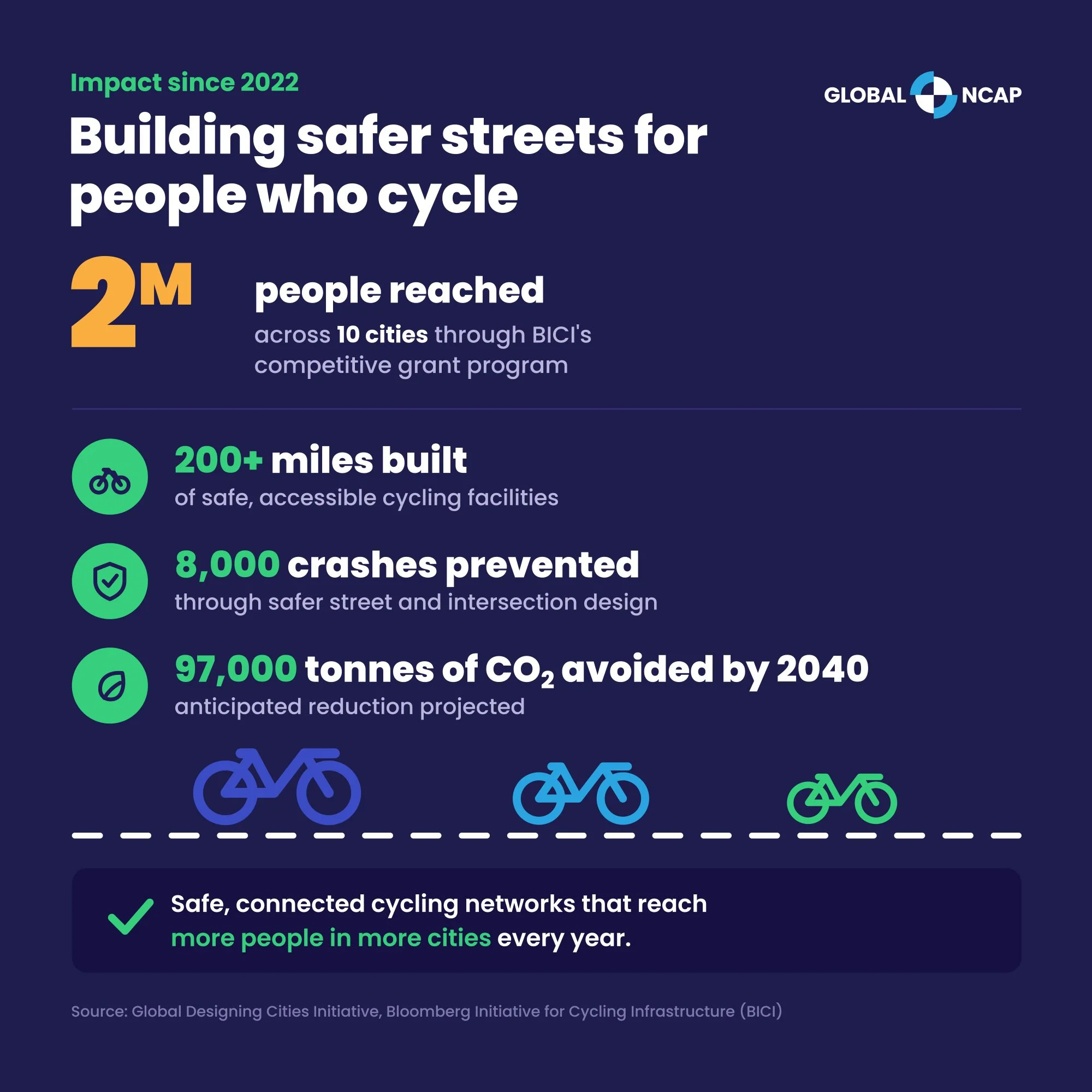
To date, the initiative has reached two million people across 10 cities and trained more than 850 practitioners. It has led to the building of over 200 miles of safe, accessible cycling facilities, preventing 8,000 crashes with an anticipated 97,000 tons of CO2 emissions spared as a result by 2040.
The 10 cities selected were Fortaleza, Brazil; Addis Ababa, Ethiopia; Bogotá, Colombia; Lisbon, Portugal; Milan, Italy; Mombasa, Kenya; Pimpri-Chinchwad, India; Quelimane, Mozambique; Tirana, Albania and Wellington, New Zealand.
From developing a cycling corridor that connects 40 schools in Milan to doubling the number of protected cycling tracks in Addis Ababa, BICI worked with each city on their respective projects, aiming to transform their streets by putting people above all.
Following the success of the programme, the next phase of BICI goes one step further.
BICI 2.0
BICI will now engage 25 cities across the world to design and implement leading cycling networks.
A two-phased approach will see these cities receive technical assistance, capacity building and peer-learning opportunities, while 10 of them will receive $400,000 grants for implementation. The funding comes from the $350 million investment announced for Bloomberg Philanthropies earlier this year, dedicated to BICI and the Bloomberg Philanthropies Initiative for Global Road Safety.
The initiative will culminate in the publication of the first-ever global cycling design guide to supplement the highly-regarded Global Street Design Guide - looked to from every corner of the globe when it comes to designing streets for people.
Cycling world leaders back BICI
With BICI’s second phase comes a distinguished group of leaders who will bring their own experiences in cycling planning to the next cohort of cities.
The ‘Global Advisor Cities’ network will be made up of three cities renowned for cycling action: New York, London and Paris.
Each city will be represented by a policy expert: Mike Flynn, Commissioner of the New York City Department of Transportation; Will Norman, London’s first Walking and Cycling Commissioner; and Dan Lert, Deputy Mayor of Paris.
One only has to look at these cities to appreciate what’s possible when leaders give cycling the attention it deserves. Hundreds of miles of protected bike lanes and the pedestrianisation of plazas like Times Square have transformed New York City’s streetscape, while hundreds of redesigns have brought pedestrian fatalities down to historic lows.
Under Will Norman’s leadership, London’s cycle network has expanded fivefold to become longer than the London Underground, with more than 1.5 million cycling journeys taken in the capital every day. Alongside congestion charges, low-traffic neighbourhoods and cycling superhighways, London is strategically shifting street priority away from cars and for its people.
Meanwhile Paris serves as both a European and global blueprint for unprecedented rapid street transformation. The city recently voted to make 500 more streets car-free after a move to hike parking charges for SUVs. Looking back further, the transformation of the River Seine banks saw an urban highway that transported over 40,000 vehicles per day converted into parks, promenades and playgrounds. Dan Lert plans to continue this legacy, reclaiming space from cars and developing cycling infrastructure and streets for kids to ensure that the city serves its children.
With each city a proven example of what is possible when cycling is given sustained political attention, few are better placed to help BICI enter its next phase than New York, London and Paris. Their leaders will share their expertise, lessons learned and perspectives with cities participating in BICI to translate their own experiences into practical insight for the next generation of cycling infrastructure across the world.