Keep it simple: Buttons back for basic functions
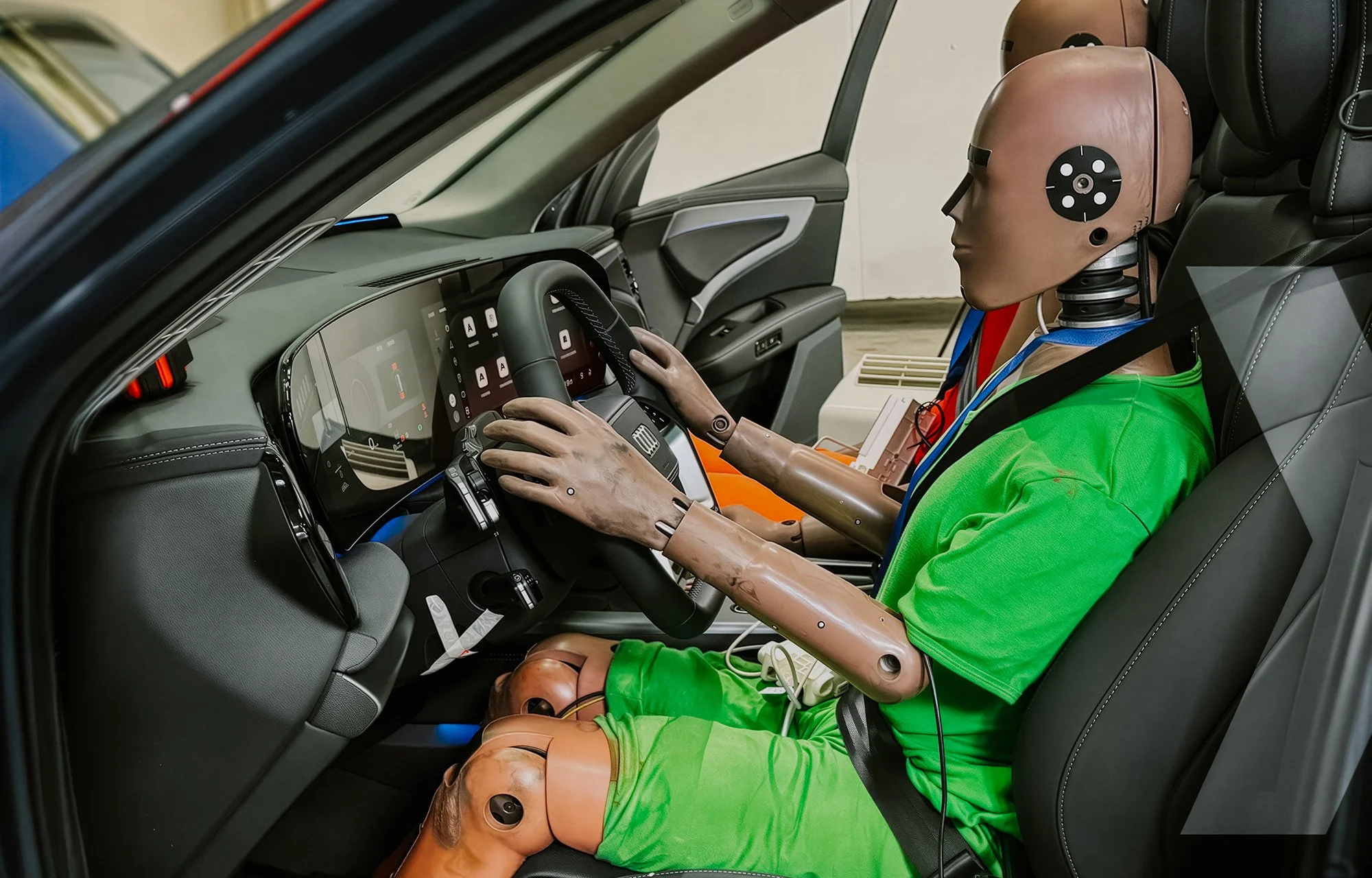
Euro NCAP’s latest round of vehicle safety tests have found that some manufacturers are bringing physical buttons back to serve basic functions.
In an increasingly complex and digital age, the testing body has long called for the use of simple, physical controls for essential functions in vehicles, advocating that this is the safest approach for drivers.
Three new cars have been assessed under Euro NCAP’s 2026 protocols: the Kia EV2, the Audi Q7 and the XPENG X9. The results highlight which manufacturers are making a steady return back to buttons and switches, shifting away from touchscreens, voice controls and more digital methods.
What Euro NCAP found
Euro NCAP’s latest testing protocols state that key driving controls like indicators, windscreen wipers, hazard warning lights, the horn and eCall emergency button should be operated by a direct physical input rather than hidden within a touchscreen menu.
The Kia EV2 achieved “excellent” scores for its controls, with a 100% rating for its use of manual buttons and switches both for comfort and infotainment, and driving controls.
Under a wider five-star Euro NCAP rating, the Kia EV2 was credited for its Driver State Monitoring system which varies its warning strategy depending on driver alertness. Euro NCAP evaluates driver assistance features like lane departure prevention for how they work in accordance with driver attention levels, varying intervention timing and severity based on whether the driver is focused or distracted. Systems must demonstrate a difference in response to drivers who are attentive and those who are distracted to score well.
An 86% crash protection score, 89% post crash safety score, 74% safe driving score and 66% crash avoidance score fed into the EV2’s five-star rating.
The Audi Q7 SUV, a premium car aimed at families, was also found to be a good example of driving controls that are simple, intuitive and safe.
Part of the Volkswagen Group, Audi has previously been criticised for doing away with buttons and switches but reinstated them in response to consumer feedback and Euro NCAP cues. The Q7 scored an overall 90% for driving controls under Euro NCAP testing. Essential driving tasks received a score of 100% while comfort and infotainment services scored 80%.
What fed into this scoring, and the Q7’s wider five-star rating, are buttons and stalks that are clearly visible, ergonomically sited and easy to be operated manually, reducing driver distraction.
Euro NCAP’s Safe Driving evaluation also found that the Q7’s lane departure system varies its sensitivity depending on how attentive the driver is, reducing the warnings and interventions if the driver is alert and not distracted. Combined with “excellent” occupant protection across frontal, side and pole impacts, Euro NCAP concludes that the Q7 “impresses”.
While the Q7 and EV2 demonstrate a return to basic buttons, the XPENG X9 was found to rely too heavily on touchscreen technology. The Chinese automaker’s model scored just 20% for its primary driving controls but scored 80% for its comfort and infotainment.
Euro NCAP concluded that the XPENG X9, a large MPV, relies heavily on its central touchscreen for core functions which may lead to driver distraction. However, a 91% crash protection score, 91% post crash safety score, 82% crash avoidance score and 57% safe driving score means the model still received a five-star overall rating.
Euro NCAP found that where the X9 falters is in its speed assistance system which didn’t meet Euro NCAP’s effectiveness benchmarks during a 2000 kilometre real-world European test drive. Under conditional speed limits (such as wet weather restrictions or HGV-specific limits) the system failed to meet basic protocol requirements to display the last known speed limit alongside a clear indication when an uninterpretable sign was encountered.
The global comparison
From the cars tested by Euro NCAP in 2026, there appears to be clear differences between European manufacturers and Chinese carmakers.
European models are found to score highly for buttons that serve basic functions, with the BMW iX3 scoring 100% for driving controls and the CUPRA Raval scoring 80%. In contrast, the Chinese ZEEKR 7GT and AION UT score 20% with the Leapmotor B05 receiving a score of 0%.
The Chinese GEELY E2 is an exception, scoring 80% in driving controls.
“Euro NCAP is continually monitoring market trends and the move toward placing as many driving controls within a car’s touchscreen system is one that has concerned us just as much as it has annoyed consumers,” said Dr. Aled Williams, Programme Director at Euro NCAP.
“It is clear in these results that the XPENG adheres to the mantra that everything must be included in the touch screen, despite overwhelmingly negative feedback by European car buyers. We applaud Audi and Kia for taking a more common-sense approach. Our latest protocols reward the intelligent use of physical buttons and controls, as this can reduce driver distraction, and both Audi’s new Q7 and Kia’s EV2 do an excellent job of keeping safety simple.
“Other manufacturers, including XPENG, would do well to follow this strategy.”