EU road deaths drop 15% since 2019
New figures from the European Commission reveal that road deaths dropped 15% across the EU in 2025 compared with 2019 levels.
A 3% drop has been observed since 2024.
The Commission counted 19,350 road deaths last year - 3,400 fewer than in 2019 and 580 less than in 2024.
While the promising trend reaffirms the EU as one of the safest regions in the world for road travel, the Commission emphasised a somber reality: the majority of Member States are not on track to meeting the EU target of halving road deaths and serious injuries by 2030.
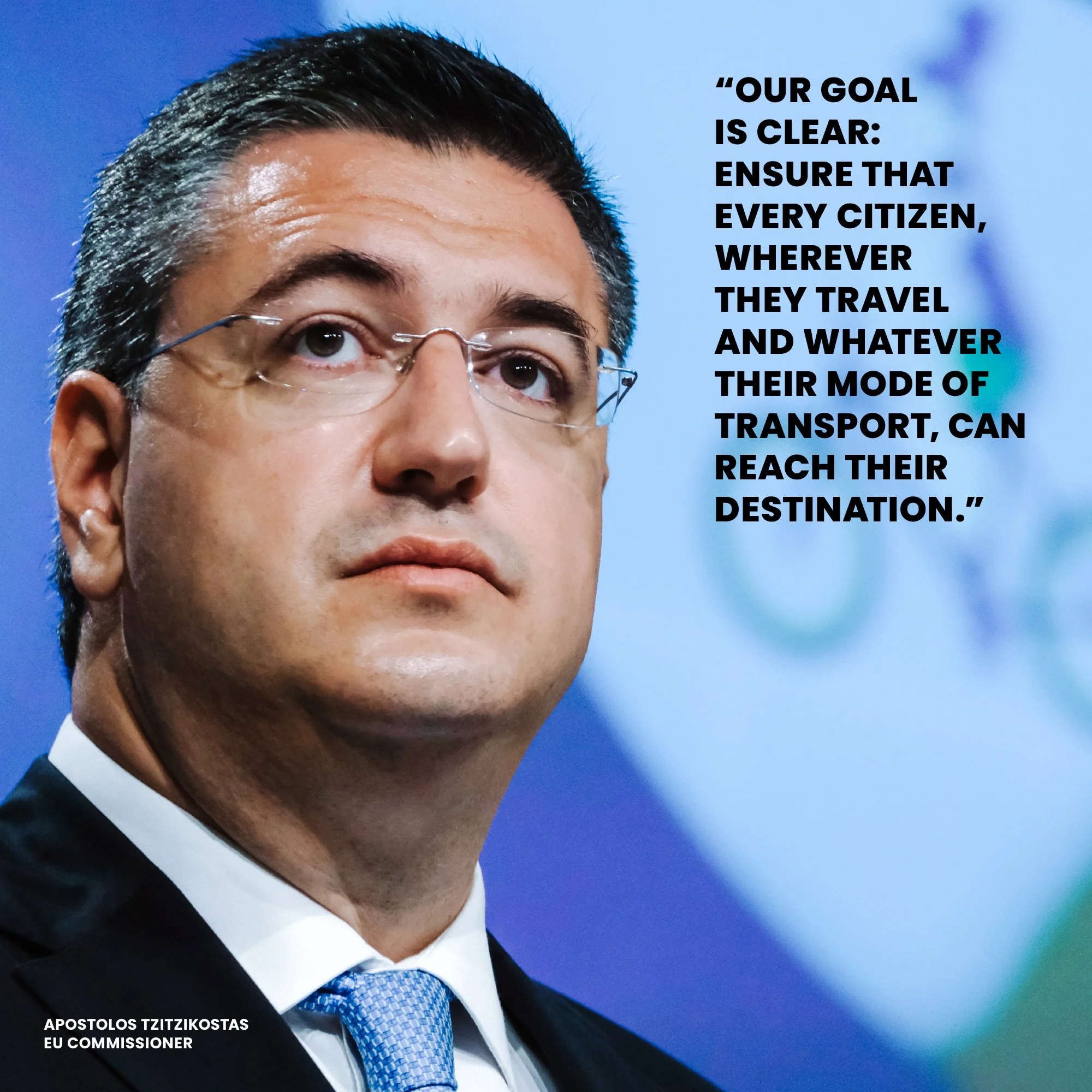
“Road safety is about more than rules and regulations. It is about protecting lives and preventing tragedies that affect families and communities across Europe,” said Apostolos Tzitzikostas, European Commissioner for Sustainable Transport and Tourism.
“In the European Union, every life lost on our roads is one too many. Our goal is clear: to ensure that every citizen, wherever they travel and whatever their mode of transport, can reach their destination. This means making our roads safer, strengthening prevention and ensuring that every journey ends safely."
The data dissected
Only five countries are set to meet the 50% reduction target in road deaths by 2030. These are Belgium, Bulgaria, Denmark, Poland and Romania.
Bulgaria, Romania and Croatia, however, continue to have the highest fatality rates in the EU when measuring deaths per million inhabitants, with the figures standing at 71, 68 and 65 deaths per million respectively. Sweden and Denmark, meanwhile, report the lowest fatality rates with a respective 19 and 24 deaths per million inhabitants.
The data finds that elderly people are more often victims of road crashes than other age groups. Meanwhile, passenger cars and vulnerable road users like pedestrians, cyclists and motorcycle users are most exposed to road casualties.
With regard to where road deaths occur, most are on rural roads outside of urban areas.
An estimated five people are seriously injured for every road fatality. With the latest 2025 figures, this means that around 100,000 people across the EU still suffer serious injuries in road crashes every year, with the impact extending beyond the physical to the psychological and the socioeconomic wellbeing of victims and their families.
Based on 2026 provisional figures, the number of countries that report a reduction of fatalities above 5% in the first half of the year compared with the same period in 2025 is higher than those which report increases in road deaths.
This is positive. However, in some countries this is due to small numbers with year-on-year fluctuations, meaning the figures should be taken with caution. Also, road fatalities are subject to seasonality, with higher incidence of crashes over the summer period.
A wider trend and the promise of vehicle safety technologies
The new EU figures continue a positive trajectory that goes back more than three decades, and vehicle safety technologies have a role to play in that trend.
In 1995, the EU recorded around 64,000 road deaths. Around this time, the European Commission had recently developed its first action plan on road safety which led to the adoption of front and side-impact crash test standards and helped pave the way for the creation of Euro NCAP.
By 2025, annual road deaths across the EU had fallen to around 19,400 - a reduction of roughly 70%.
During European Mobility Week in September, Global NCAP joined the Eastern Alliance for Safe and Sustainable Transport (EASST) and the European Bank for Reconstruction and Development (EBRD) to dissect three decades of European vehicle safety legislation.
Delivering the keynote, the Rt Hon Lord Kinnock PC, former EU Transport Commissioner and Vice President of the European Commission, emphasised how the measures taken since 1995 have helped spare nearly one million lives.
“Since 1995 the total population of the 27 countries making up the European Union has grown by 50 million. However, the annual number of road fatalities has been reduced by more than two-thirds,” Lord Kinnock PC said.
“Serious injuries have fallen from half a million to around 100,000 people. It is still a priority to get these numbers down. But had it not been for actions to improve road safety in 1995, we would be mourning the loss of over 900,000 additional EU citizens killed on our roads. Nearly a million people have escaped death due to our collective actions.
“That’s something to be proud about.”
The path forward
The new data comes ahead of the 2026 EU Road Safety Conference which takes place in Brussels on 23 November and will mark the halfway point in Europe’s 10-year strategy to halve road deaths and serious injuries by 2030.
With most Member States off track to meet that target, the conference comes at a critical juncture. Policymakers, researchers, civil society and industry will examine how Europe can accelerate success, while considering how evolving mobility trends and developments - like the rise of connected and automated vehicles - will shape the future of road safety.
The task now is to build on decades of progress, ensuring that evidence-based policy and data-driven interventions translate into lives saved on the road, with Global NCAP to continue championing vehicle safety technologies as a central pillar of these efforts.