WHO invites journalists in Africa to shape road safety reporting guidelines
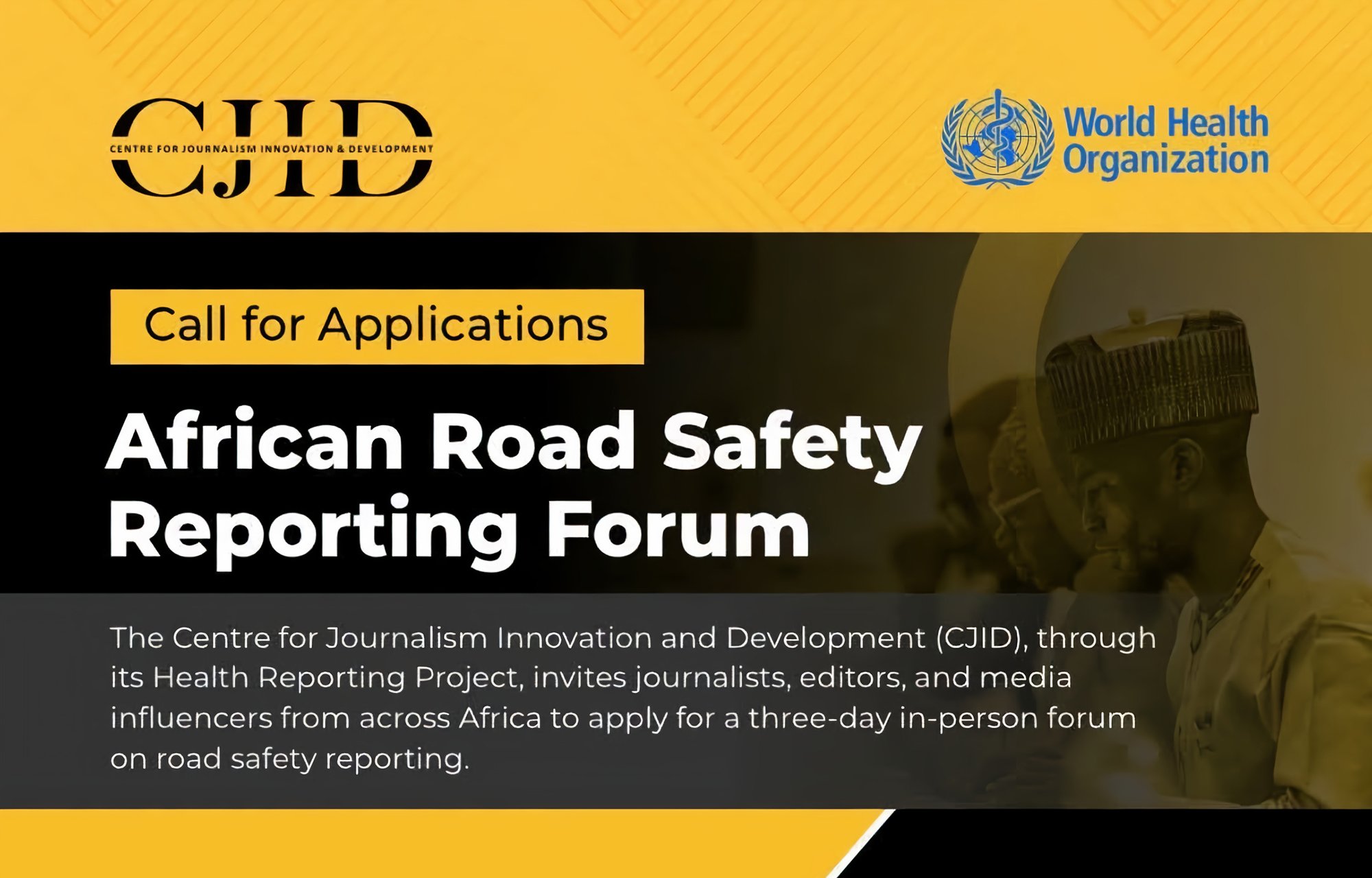
The World Health Organization (WHO) and the Centre for Journalism Innovation and Development (CJID) are inviting journalists across Africa to shape the continent’s first standards for reporting on road safety.
The two bodies have announced a collaboration in response to the public health crisis that is road deaths. Road traffic crashes are the leading cause of death among children and young people aged five to 29 across the world, with a disproportionate number of deaths observed in Africa.
While global road deaths have fallen over the past decade, Africa is the only WHO region to have observed a rising number of fatalities, with a 17% increase between 2010 and 2021.
Africa accounts for nearly 20% of road deaths globally despite being home to 15% of the world’s population.
“The way societies understand road crashes shapes the policies they demand and the solutions they support,” said Akintunde Babatunde, Executive Director of the CJID.
“Through this partnership with the World Health Organization, CJID is bringing together journalists, editors and media influencers from across Africa to strengthen evidence-based reporting, advance accountability and help build a media ecosystem that contributes to safer roads and saves lives.”
The partnership aims to improve how African newsrooms report on road safety, shifting away from framing crashes as unavoidable accidents with the burden of responsibility placed on the road user. Instead, the bodies argue that reporting should frame incidents as preventable tragedies with real solutions such as improving infrastructure, governance and policy.
Editors, journalists and media influencers across Africa are invited to apply to take part in a three-day forum which will be hosted in Abuja, Nigeria, this September. Those based in Nigeria, Kenya, Uganda, Ethiopia and South Africa will be prioritised, while those from across the continent may also be considered, with a total of 20 applicants to be selected.
The three-day forum will see participants work with WHO technical experts and African editors to develop industry-standard editorial and reporting guidelines on road safety for the continent. Participants will also produce a series of road safety stories to put the new guidelines into practice, while refining the guidelines through an online working group after the forum.
Successful applicants will receive practical training on reporting alongside full support for travel, accommodation and daily stipend.
Ifeanyi Chukwudi, who leads the implementation of the African Road Safety Reporting initiative at CJID, said that the two bodies aim to give African journalists “the evidence, the tools and the shared standards to report road safety as the systemic and solvable problem it is”.
Applications are open until 10 July 2026 for editors, journalists, and media influencers to redefine the narrative on road safety across the continent and help bring Africa in line with the global trend of reducing these preventable tragedies.