Helmet use to quality helmets: Asia-Pacific nations unite in Hanoi
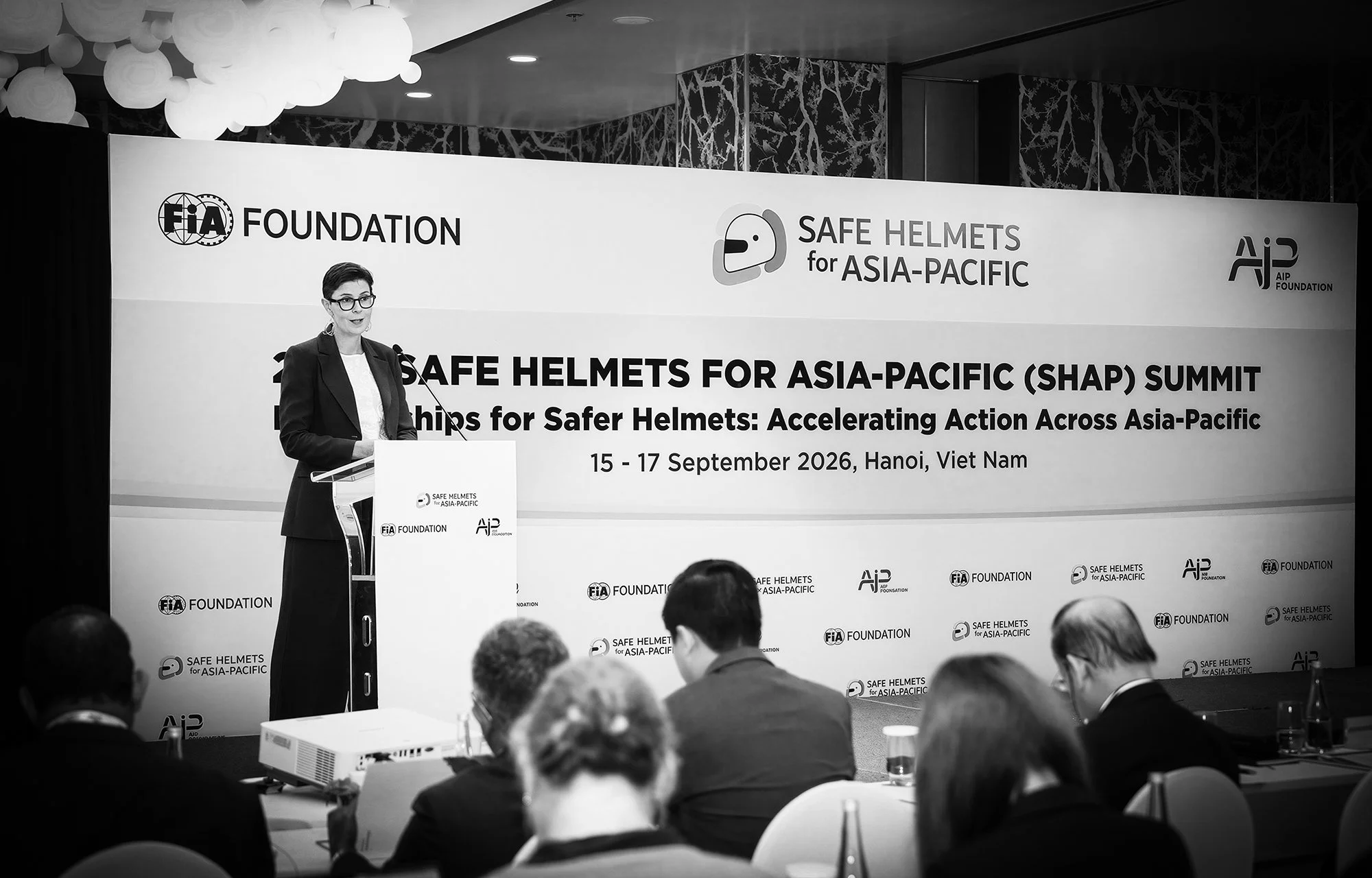
More than half of the world’s road traffic fatalities occur in South-East Asia and the Western Pacific. In these regions, powered two and three-wheelers account for more than a third of road deaths.
Helmets are one of the most effective tools for protecting riders. They can reduce the risk of death sixfold and the risk of brain injury by up to 74%.
But simply wearing a helmet is not enough. Helmets can only live up to those statistics if they meet quality standards, undergo rigorous testing and are affordable and accessible in the first place.
That was the focus in Hanoi, Vietnam, as governments, road safety experts and civil society organisations from across the Asia-Pacific region gathered for the Safe Helmets for Asia Pacific (SHAP) Summit 2026.
Launched by the FIA Foundation and AIP Foundation last year in Manila, the SHAP initiative aims to provide the critical platform to accelerate government legislation and enforcement of safe, certified helmets with universal access.
“Motorcycles are an essential way to move across countries of the Asia Pacific. Safe, certified helmets are one of the most effective solutions to prevent death and serious injury for motorcycle riders,” said Aggie Krasnolucka, Programmes Director of the FIA Foundation. “SHAP brings together the region for governments and technical partners to focus on how every rider, every passenger and every family is protected.”
What Hanoi hosted
Over three days in the Vietnamese capital, representatives from Cambodia, Nepal, the Philippines, Thailand and Vietnam exchanged experiences and best practices and mapped national plans to strengthen helmet safety going forward.
The discussions covered the systems behind helmet safety including standards, testing and certification, quality assurance, market surveillance, enforcement and affordability.
Participating nations also agreed to further regional cooperation and to use the SHAP initiative as a platform for continued work on safer helmets.
“SHAP is bringing countries together to understand and tackle the shared challenges across the Asia Pacific Region,” said Dr. Terry Smith, an international helmet expert and road safety specialist. “We’ve been building technical expertise about what makes a protective and effective helmet, showing how manufacturing and testing can be achieved right here in Vietnam and setting up the road map for policy and implementation across the region.”
The message from Hanoi was clear: helmet safety cannot stop at getting riders to wear one. It depends on national action, coordinated partnerships and an unwavering strive to ensure that every rider and passenger has access to a helmet built to save lives.
Vietnam shows it’s possible
Vietnam was more than a host nation for the Summit. It’s a case study of what national action can achieve.
In 2007, Vietnam introduced a universal helmet law which saw adult helmet-wearing rates rise from 6% to more than 90%. According to estimates from the AIP Foundation, this law contributed to US$12.045 billion in savings in medical costs and lost economic productivity.
“We must now ensure that the helmets people wear are safe, certified and capable of providing meaningful protection. SHAP gives countries across Asia-Pacific an opportunity to learn from one another and work together to build stronger helmet safety systems,” said Sir Greig Craft, Founder and President of AIP Foundation.
The Hanoi Summit follows the Safe African Helmets Initiative (SAHI) Summit, held in Accra, Ghana, last month. There, helmet safety was similarly brought into urgent focus with motorcyclists accounting for 35% of all road deaths across Africa.
This challenge is not confined to one region. As motorcycle use continues to underpin mobility across much of the world, ensuring that riders and passengers have access to safe, certified helmets remains a critical global road safety priority to prevent deaths.