Global NCAP releases Seatbelt Safety Declaration
The seatbelt is one of the most effective and cost-efficient means of saving a life on the road.
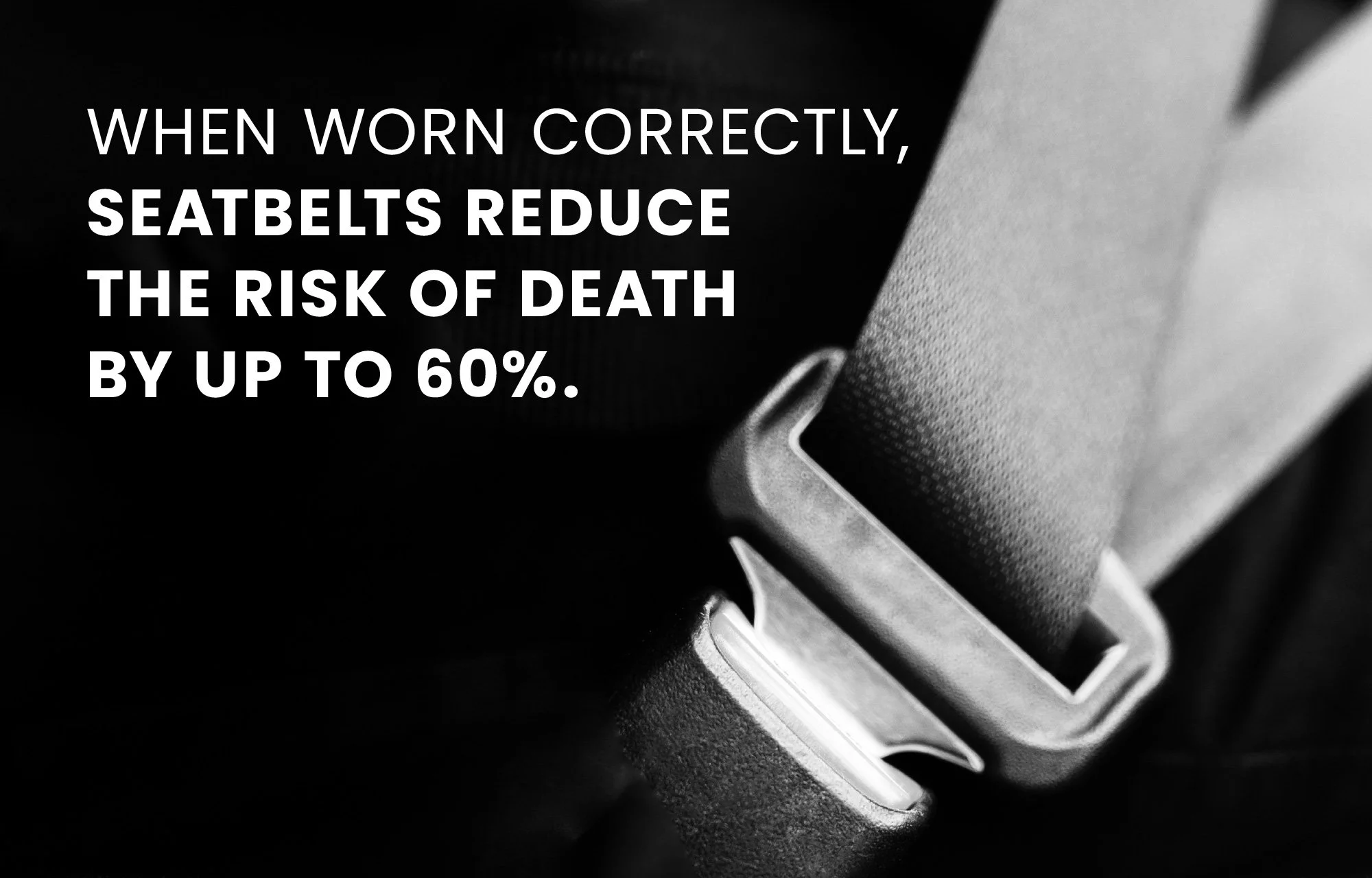
It’s the most important passive safety device ever fitted to a vehicle, reducing the risk of death by up to 60% when worn correctly.
Yet, more than half a century after its introduction, millions of people today still do not have access to, or use, a seatbelt. The issue is most pronounced in low and middle-income countries, regions that already bear the heaviest burden of road death.
That is why, at the UN High-Level Meeting in New York, Global NCAP published its Seatbelt Safety Declaration, endorsed by NCAPs across the world including Euro NCAP, C-NCAP, ASEAN NCAP as well as the Insurance Institute for Highway Safety.
Seatbelts must be standard in every vehicle, every seat, at every price point for every person. Seatbelts must not be a solution for only those that can afford them.
The onus of responsibility lies on governments who must legislate and enforce seatbelts, the automotive industry that must apply the same safety standards to its most affordable models as to its most expensive, and to ourselves and the entire industry that advocates for safer roads to ensure that this call to action never falls silent.
The Declaration laid out
Our Seatbelt Safety Declaration is a call on global policymakers, regulators and manufacturers to recognise and act on the life-saving impact of seatbelts, child restraint systems and occupant-protection technologies.
A collective will must emerge to make seatbelts standard in every single vehicle across the globe.
The seatbelt is the single most important passive safety device ever fitted to a motor vehicle. Ensuring its availability and its consistent and correct use remains some of the most effective actions in reducing road deaths and serious injuries.
When worn correctly, seatbelts reduce the risk of death by up to 60%.
The global road safety crisis, in which approximately 1.19 million people lose their lives every year, cannot be meaningfully addressed without dramatically improving the availability of seatbelts and seatbelt wearing rates, particularly in low and middle-income countries.
Road crashes are the leading cause of death for children and they are among the most vulnerable vehicle occupants. Ensuring the availability of safer child restraint systems (CRSs), correct equipment in vehicles for safe installation and the proper use of age-appropriate CRSs are absolutely critical to the safety of children travelling in vehicles.
Seatbelt effectiveness depends entirely on correct use, worn across the chest and the lap and over the shoulder and actions to encourage correct wearing technique is as important as promoting use itself.
The dangerous misconception that rear seat travel is inherently safe without restraint use must be vigorously challenged and corrected.
Governments at every level are encouraged to enact, enforce, and continuously strengthen legislation mandating the availability of seatbelts and seatbelt use for all occupants and in all seating positions and for all vehicle types.
Recommended minimum safety technologies including seatbelt reminders, pre-tensioners, load limiters, ISOFIX and airbag systems should be standard equipment across all vehicle segments and price points globally.
The automotive industry’s commitment to safety must be judged by the standards it applies to every vehicle it produces worldwide, including the most affordable models in emerging markets.
UN Sustainable Development Goal 3.6, to halve global deaths and injuries from road traffic crashes by 2030, cannot be achieved without seatbelt availability and use in all seating positions being treated as a non-negotiable action of every national road safety strategy.
Further technological improvements and innovations are still needed to improve the safety performance and design of seatbelts for all user groups and to ensure consistent and appropriate use.
There is no excuse
This is not a technological challenge. A seatbelt is not ADAS technology. It is not ABS or AEB where vehicle manufacturers can hide behind the excuse of technological complexity or the cost of installation.
Seatbelts are one of simplest and oldest proven solutions to save lives on the road.
What lacks is the collective will to understand that proven solution.
Only 63 countries have national data on seatbelt use, with many low and middle-income countries lacking systematic reporting. While 170 countries have mandatory seatbelt laws, just 117 meet WHO best practice standards and only 12 report compliance rates above 80% for all occupants.
Our call to governments, manufacturers and the industry is clear. Seatbelts must be standard in every single vehicle. There is no excuse.
The world is far from meeting the global target of halving road deaths and serious injuries by 2030. So long as the seatbelt remains a fragmented global experiment, this target will never be in reach.